Den gamle messen er her «for å bli»
«The Pope has made clear the older rite is here to stay» skriver dr. Alcuin Reid (alle som kjenner til ham, vet at han har støttet den tradisjonelle liturgien lenge og grundig) i en artikkel i the Catholic Herald. Han starter artikkelen slik:
It may seem rather odd that Pope Benedict XVI has expended so much energy on rules about the use of the old “Latin Mass” – after all, it would appear that most Catholics are content with the modern liturgy in the vernacular. Why, then, yet another set of rules from Rome in this Instruction?
The answer is found in the fact that, as the Instruction insists, the older rites are a “precious treasure to be preserved,” and that the Holy Father wants to offer this treasure “to all the faithful”, not as a quaint museum piece but as a living source of life and grace for the whole Church of today and into the future. All laity, clergy and religious should have access to its diverse riches.
These latest rules envisage the inclusion of recent saints and some new texts in the older liturgy. They even foresee new editions of the missal and other liturgical books of the older rites: the older liturgy will continue to exist and develop as it has over the centuries up until the Second Vatican Council. But it cannot, however, now have certain modern practices (altar girls, extraordinary ministers of Holy Communion, etc) imposed on it. Its integrity is guaranteed.
Of course, there are historical realities behind this Instruction and the 2007 Motu Proprio Summorum Pontificum which it clarifies. In the first place there is the controversy over the liturgical changes that followed the Council. Were they a legitimate development or did they involve a rupture with tradition? Neither of these documents settles that question, but the Instruction does, significantly, speak of the development of the Missale Romanum “until the time of Blessed Pope John XXIII” and of the “new Missal” approved for the Church in 1970 by Paul VI. ….
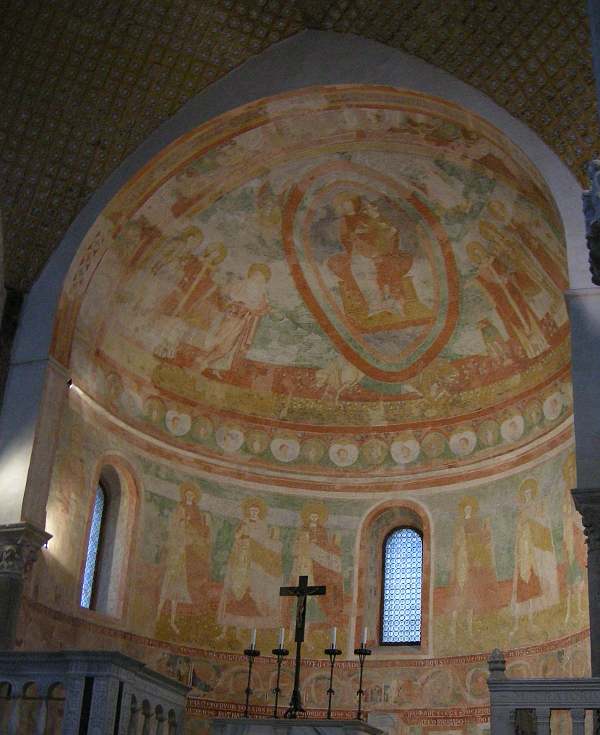
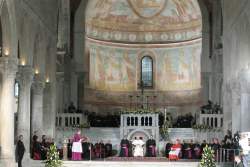 … Pope Benedict wasted no time in establishing the themes and the tone of the visit, right from the get-go. In Aquileia, the Holy Father’s first public remarks were at the Piazza del Capitolo outside the Basilica of Aquileia. Often these greetings are really just an exchange of official pleasantries, but this time, Pope Benedict praised the Church of Aquileia in a prose that waxed rhapsodic.