Mer om hvordan liturgiforandringene ble gjennomført på 60-tallet
Kenneth Whitehead skriver i sin bok «Mass Misunderstandings» videre om hvodan liturgiforandringene ble gjennomført – mest av liturgieksperter, som stort sett fikk sine forslag akseptert av biskoper og Vatikanet. Dette skjedde etter at Vatikankonsilet hadde vedtatt et balansert og forsiktig dokument om liturgien (se her), som også erkebiskop Marcel Lefebvre stemte for. Her er et sitat fa s 102-104 i Whiteheads bok (før han går over til å se på en del enkeltsaker; bl.a. om at liturgiekspertene vant fram med sitt syn om at man skulle stå når man mottar kommunion, men ikke med sitt ønske om at folk ikke skulle knele i kirkene i det hele tatt, og at knelebenkene burde tas bort):
…. … there is probably no single or easy answer to the overall question of why the things that went wrong did go wrong. We have already adverted to some of these reasons: an imperfect understanding of the Council’s intentions; the abrupt and seemingly unplanned way that so many things were changed, often in no particular order and without many explanations being provided; and the fact that most priests did not really understand what was happening and why. There was also a fairly general failure on the part of Church authorities to understand that any change, even a needed and legitimate change, in people’s deep-seated habits of prayer and worship, was bound to have consequences. These consequences should have been anticipated and taken into account. Nor was it just a matter of not disturbing people’s habits: constant changes too easily do accustom us to regard the Mass and the sacraments as malleable things, as things that we can devise and control, rather than things coming to us by the will of Christ in the Church.
To all these reasons there must be added yet another one, namely. the undue influence of modem «liturgists,» that is, liturgical experts too often intent upon their own in-group ideas rather than upon the needs and sensibilities of the faithful. Reliance on «experts» and «professionals,» rather than upon reason and common sense, has in many ways been the bane of the post-conciliar period generally.
Then, of course, there was the too frequent and marked impatience and sometimes even the arrogance of some of those in authority, relying uncritically upon their experts, and prone to dig in their heels when faced with perceived resistance to, or criticism of, many of the changes that were being made.
And yet again, in a much more general sense, it should also have been more clearly recognized by Church authority that concepts such as «noble simplicity» and «full, conscious, and active participation» in liturgical celebrations, although consciously and honestly launched by the Council itself, were almost inevitably going to be interpreted in different ways by different people. For some, «noble simplicity» can apparently mean denuding churches of statues and stations of the cross, or dismantling decorative altar rails or screens …
Mer om hvordan liturgiforandringene ble gjennomført på 60-talletLes mer »
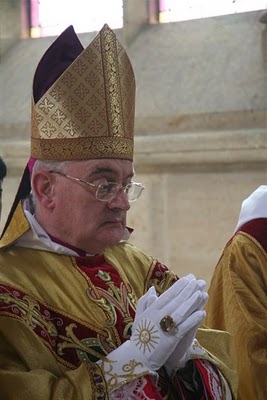 Biskop Elliott i Melbourne, Australia, som jeg skrev om i går (se her), hadde da visse innvendinger mot den tradisjonelle latinske messen, men har nå begynt å feire den selv. En av grunnene til hans forandring er at artikkelen jeg da siterte, var skrevet for 6-8 år siden, og nå etter pave Benedikts Summorum Pontificum er situasjonen blitt ganske ny. Dessuten var Elliot i mot en viss type TLM, der presten og ministrantene holdt på med noe for selv oppe ved alteret, mens folket gjorde andre ting – sang salmer vanligvis. Messen han her feiret (