Hvordan bør ‘ordets del’ av messen foregå?
Det er interessant (syns jeg, og svært forbløffende hvis man tenker bare noen få år tilbake) at en av pavens rådgivere, P. Mauro Gagliardi, i det som på engelsk kalles «the Office for the Liturgical Celebrations of the Supreme Pontiff», ser både på den nye og den gamle messen når han i en artikkel hos Zenit.org skal gi råd om hvordan ordets del av messen skal foregå. Han har ikke plass, skriver han, til å se på den gamle messens høytidelige form (litt dumt syns jeg, fordi her står subdiakon og diakon ikke ved alteret når de synger tekstene), men han skriver slik om den gamle messens enkleste form:
In the “Low Mass” (a simple celebration for daily use) of the extraordinary form, the priest reads all the readings, that is, the Epistle, the Gradual and the Gospel. In general, he does this while assuming the same position that he does when he will later offer the holy sacrifice. Using a misleading but common expression, we might say that the priest proclaims the Liturgy of the Word “with his back to the people.” The language of the proclamation is the same as the whole rite, that is, Latin, or sometimes the vernacular, as section 6 of the Motu Proprio “Summorum Pontificum” recalls.
After the Epistle is read there follows the Gradual, which receives its name from the steps (in Latin “gradus”) that the deacon ascends to read the Gospel from the ambo in a solemn Mass. After the Gradual, the Alleluia is read with its verse. … …
Om messens nye form skriver han bl.a. dette:
The Liturgy of the Word in the Missal of Paul VI kept different elements of the Missal Pius V, even if others have been suppressed and some added. The language of the proclamation has not been changed since Latin has remained the proper language of the Roman liturgy even in the post-conciliar reform, the reason for which the new lectionaries (now printed in books separate from the Missal) were published in Latin in 1969 and 1981.
On the other hand, the “editio typica” has been translated into the various national languages and these translations are what are generally used. …
A first difference between the two forms of the Roman Rite we see in the fact that, even in the daily Mass, celebrated in a non-solemn form, the possibility of other readers proclaiming the biblical passages — except for the Gospel — is foreseen, even if it remains possible for the priest to read all the texts of the Liturgy of the Word. …
Mot slutten skriver han: …
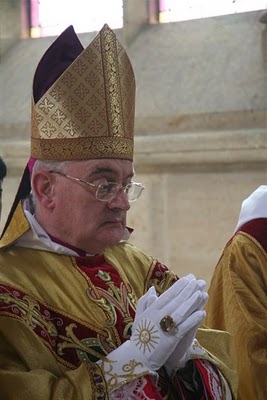 Biskop Elliott i Melbourne, Australia, som jeg skrev om i går (se her), hadde da visse innvendinger mot den tradisjonelle latinske messen, men har nå begynt å feire den selv. En av grunnene til hans forandring er at artikkelen jeg da siterte, var skrevet for 6-8 år siden, og nå etter pave Benedikts Summorum Pontificum er situasjonen blitt ganske ny. Dessuten var Elliot i mot en viss type TLM, der presten og ministrantene holdt på med noe for selv oppe ved alteret, mens folket gjorde andre ting – sang salmer vanligvis. Messen han her feiret (