Benediktinerne i Norcia skal feire både den gamle og den nye messen
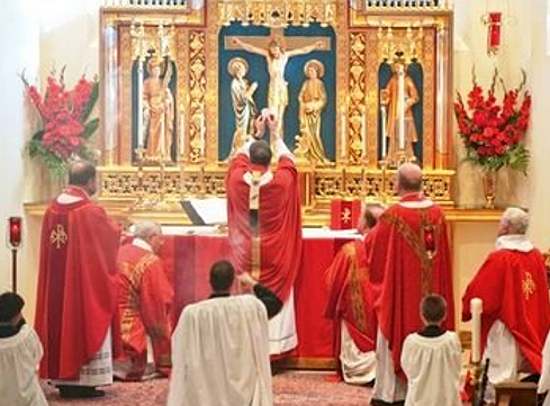
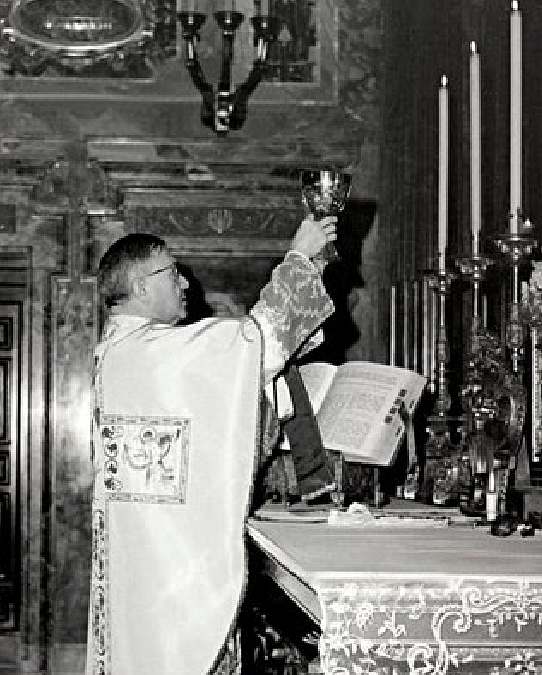
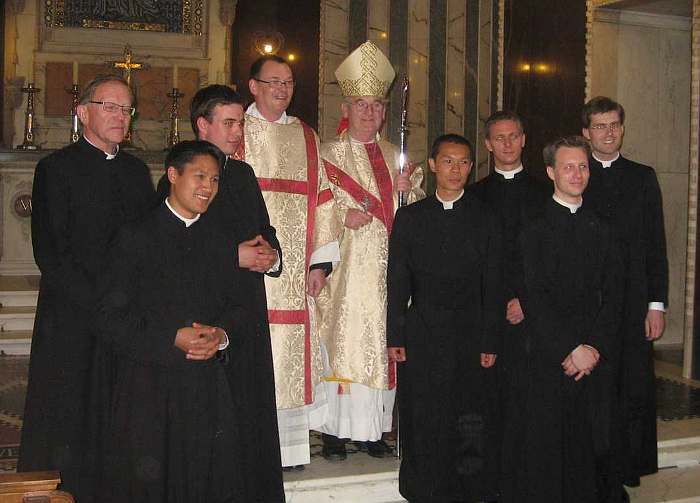
Benediktinerne i moderklosteret i Norcia i Italia har – etter forespørsel fra Vatikanet – bestemt at de skal feire både den nye og den gamle messen i sitt kloster. I april i år sendte kardinal Dario Castrillon Hoyos, President i kommisjonen “Ecclesia Dei” følgende brev til klosterets prior, p. Cassian Folsom, OSB:
His Holiness, Pope Benedict XVI, from the very beginning of his pontificate, has made known his desire to foster the unity of the Church. As in the past so also today, the careful celebration of the Sacred Mysteries is a most efficacious instrument for achieving this goal.
For this reason, fatihful to the intentions of the Motu Proprio Summorum Pontificum, this Pontifical Commission, responding to your request, entrusts to the Monastery of San Benedetto in Norcia the special apostolate of the celebration of the Holy Eucharist “in utroque usu”, that is, both in the ordinary as well as the extraordinary form of the Roman Rite, in collaboration with the Holy See and in communion with the diocesan bishop.
I am confident that your young Benedictine community will always support the pastoral activity of the Supreme Pontiff with faithful prayer.
I klosterets nyhetsbrev (pdf) kan man nå lese (som jeg allerede har nevnt) at de skal feire messen i “in utroque usu”, og i et intervju i dette nyhetsbrevet svarer prioren på spørsmål om hvorfor de gjør dette:
Does this decision respect the Second Vatican Council Council?
It would be useful to read carefully the Council document on the Liturgy, SC 22 says that: “Regulation of the sacred liturgy depends solely on the authority of the Church, that is, on the Apostolic See and, as laws may determine, on the bishop.” Pope Benedict’s Motu Proprio simply reiterates that principle, and legislates for the use of the old rite alongside the new. Pope Benedict also emphasizes that the way to interpret the Council documents is by the hermeneutic of continuity. That principle is also expressed in the document on the liturgy where it says: “…care must be taken that any new forms adopted should in some way grow organically from forms already existing” (SC 23What we’re really talking about here is legitimate pluralism, which the Council advocates as well: “Even in the liturgy, the Church has no wish to impose a rigid uniformity in matters which do not involve the faith or the good of the whole community” (SC 37). So the celebration of the Mass by all means respects the Second Vatican Council. We are embracing both usages, and reaching out to other groups in search of unity. That’s a very conciliar approach.
But doesn’t this mean “turning back the clock”?
On the contrary, I see a monastery “utriusque usus” as very forward looking, especially in terms of authentic ecumenism. By that I mean two things. …
Benediktinerne i Norcia skal feire både den gamle og den nye messenLes mer »