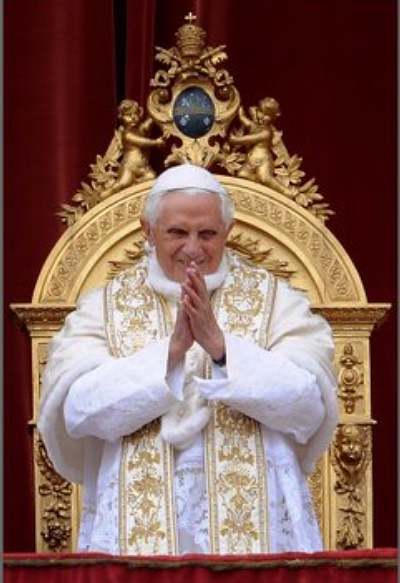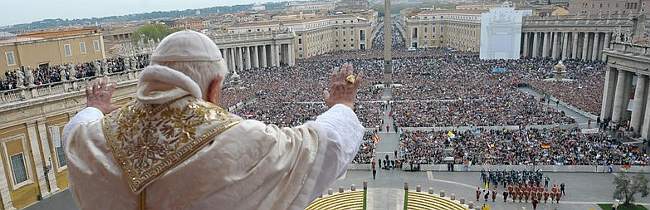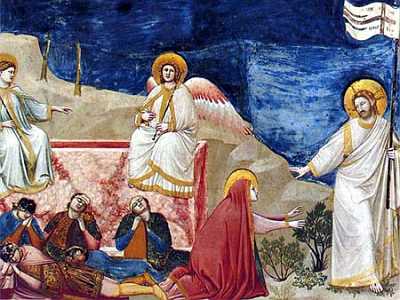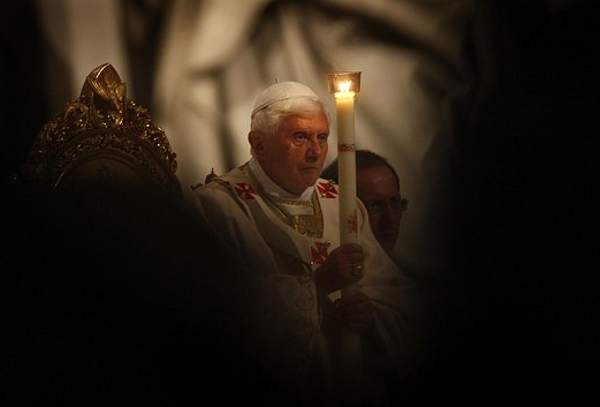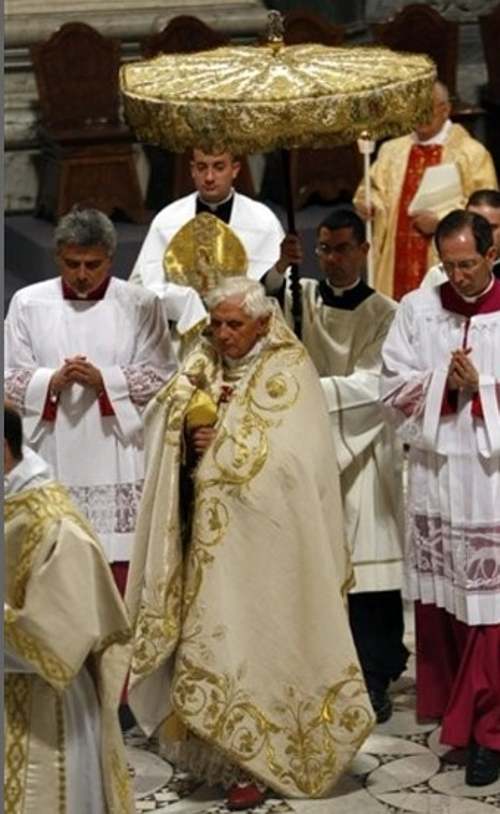
Pave Benedikt er en fantastisk forkynner
Dette skriver Sandro Magister (som har en av de beste katolske bloggene www.chiesa) i dag, og han refererer spesielt til talen papa Ratzinger holdt skjærtorsdag kveld – og i en onsdagsaudiens for ei tid tilbake. Han sier: «Den kristne revolsujonen fødes i liturgien, og dens «kanon», dens hovedregel er den eukaristiske bønn.»
During this past Holy Week, Benedict XVI accompanied each celebration with a homily, the kind that are genuinely his own, from the first word to the last. These homilies have become a distinctive sign of his pontificate. They may still be its most unfamiliar and misunderstood feature. But they are definitely its most revealing.
Pope Joseph Ratzinger is not only a theologian, even before this he is a liturgist and a homilist. On www.chiesa, this unmistakable characteristic has been highlighted repeatedly. Last year, for example, by posting to the internet in their entirety, immediately after Easter, the six homilies from the previous Holy Week. And in the fall, by editing the collection in a single volume – published by Scheiwiller, of Gruppo 24 Ore – of Benedict XVI’s homilies for the entire liturgical year that had just been completed.
But this year, the reader will not find further below all of the homilies delivered by the pope during Holy Week. These are readily available on the Vatican website.
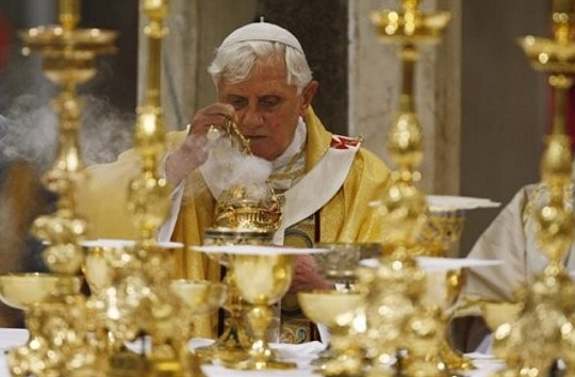
Paven åpnet sin skjærtorsdagspreken med noen ord fra den første eukaristiske bønn, slik (les hele preken på Vatikanets nettsider eller hos www.chiesa – med noen flere kommentarer):
«Qui, pridie quam pro nostra omniumque salute pateretur, hoc est hodie, accepit panem»: these words we shall pray today in the Canon of the Mass. «Hoc est hodie» – the Liturgy of Holy Thursday places the word «today» into the text of the prayer, thereby emphasizing the particular dignity of this day. It was «today» that He did this: he gave himself to us for ever in the Sacrament of his Body and Blood. This «today» is first and foremost the memorial of that first Paschal event. Yet it is something more. With the Canon, we enter into this «today». Our today comes into contact with his today. He does this now. With the word «today», the Church’s Liturgy wants us to give great inner attention to the mystery of this day, to the words in which it is expressed. We therefore seek to listen in a new way to the institution narrative, in the form in which the Church has formulated it, on the basis of Scripture and in contemplation of the Lord himself. …

Kom, følg meg, la oss gå opp på oljeberget. La oss sammen gå i møte med Kristus der han i dag kommer tilbake fra Betania, i møte med ham som frivillig går til sin ærerike og salige lidelse for å fullbyrde vår frelses mysterium. Av egen fri vilje legger han ut på veien til Jerusalem, han som for vår skyld steg ned fra himmelen, for å løfte oss jordiske opp sammen med seg, slik det står skrevet i Guds åpenbaring, ”opp over alle makter og myndigheter, over alt velde og herredømme og over alle navn som nevnes kan”. Han kommer ikke brautende og skrytende, for, sier profeten, ”han skal ikke strides og ikke skrike, heller ikke skal noen høre hans røst”. Mild og ydmyk som han er, gjør han sitt inntog på simpelt vis.