Requiemmesser i vår moderne tid
Jeg har noen ganger lagt merke til at prester i katolske begravelser fokuserer i svært liten grad på bønnen for den avdøde (til hjelp i skjærsilden), og at minneordene blir veldig tydelige og får dominere til og med i prekenen (selv om retningslinjene sier at det ikke skal skje). Selv prøver jeg alltid å følge «boka», men jeg gir gjerne litt plass til noen minneord på slutten av liturgien – etter messen, men før avslutningen ved kisten. Beskrivelsen fra USA under er vel likevel sjokkerende for alle her i Norge (hos oss vil jo ingen tenke på kremere noen før messen!):
Requiem æternam and Lux æterna are out; Amazing Grace, On Eagle’s Wings and How Great Thou Art are in. Indeed, these three songs are so ubiquitous at funeral and memorial Masses (at least two of them have been sung at 90% of the Masses for the dead that I have attended) that they almost seem to constitute a new “proper.”
Black or purple vestments are out; white vestments are in.
Eulogies after communion are typically in, despite efforts to stamp them out. People expect them today the way they expected the Dies irae in former times.
Bodies are, increasingly, out. It’s been several years since I’ve attended a funeral in my parish that featured a body rather than “cremains” or sometimes just a photo of the deceased.
In terms of overall tone (readings chosen, homilies given, etc.), intercession for the deceased is out; celebration of the life of the deceased is in.
 Polycarp was a disciple of the Apostle John, and was consecrated by him Bishop of Smyrna. He was reckoned the chief of all the Christians of Asia, because he had been taught by several of the Apostles, and other persons who had seen the Lord. During the reign of the Emperor Antoninus Pius, and while Anicetus presided over the Church of Rome, Polycarp came thither to discuss some questions regarding the time for observing Easter. He found some heretics at Rome, who had been led astray by the doctrine of Marcion and Valentine, and brought back many of them to the faith. One day Marcion met him by accident, and said to him Do you recognise me? whereto he replied I recognise the devil’s eldest son. Some time after, in the reign of Mark Antonine and Lucius Aurelius Commodus, during the fourth persecution since Nero, when the Pro-consul was ruling in Smyrna, the whole population being assembled in the theatre, clamoured against Polycarp, and to please them he was burnt. He wrote an extremely useful Epistle to the Philippians, which is publicly read in the Churches of Asia even to this day.
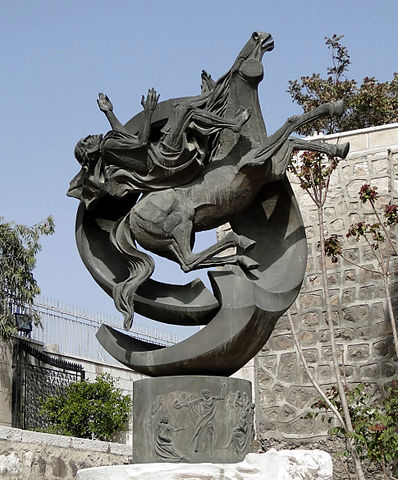 (Statuen til venstre står i Damaskus.) Men Paulus’ omvendele er i den tradisjonelle kalenderen bare en 3. klasses fest (dvs. minnedag), mens den i den nye kalenderen feires som fest, og i morgendagens Matutin leses bare hans omvendelse fra Apotl.gj. 9, ikke noe om ham fra kirkefdrene e.l.
 At Rome, under Symphronius, Prefect of the city, the holy Virgin and martyr Agnes. She was cast into the fire, but the fire died out at her prayer, and then she was smitten with the sword, (in the year 304.) Blessed Jerome writeth concerning her. The life of Agnes hath been praised in the writings and in the tongues of all nations, and most chiefly in the churches. She overcame not only the tyrant but also the weakness of her own age, and hallowed by martyrdom the title of virgin.
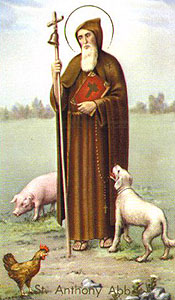 I Italia er den hellige Anton fortsatt en populær helgen, og mange av de gamle tradisjonene – med bl.a. velsignelser av dyr – lever fortsatt.