Paven til alle katolikker: Les tidebønnene!

11 000 mennesker var samlet på Petersplassen i går og hørte pave Benedikt holde sitt siste foredrag om Bibelens salmer. Og han avsluttet sin gjennomgang av salmenes bok slik:

the Pope explained that, in the course of his catechesis dedicated to the Psalms, he had sought to focus on those «that reflect the different situations in life and the various attitudes we may have towards God. I would like to renew my call to everyone to pray the Psalms, to become accustomed to using the Liturgy of the Hours, Lauds, Vespers, and Compline. Our relationship with God can only be enriched by our journeying towards Him day after day».

Og siste salme han tok opp var numemr 110 (109):

1 Herren sier til min herre: «Sett deg ved min høyre hånd til jeg får lagt dine fiendersom skammel for dine føtter!»
2 Fra Sion rekker Herren ut ditt mektige septer. Du skal herske blant dine fiender!
3 Folket ditt møter villig fram den dagen du viser din kraft. Din ungdoms dugg kommer til degi hellig prakt, fra morgenrødens fang.
4 Herren har sverget og angrer det ikke: «Du er prest til evig tid på Melkisedeks vis.»
5 Herren er ved din høyre hånd, han knuser konger på sin vredes dag.
6 Han holder dom over folkeslag, det er fullt av lik, han knuser hoder vidt over jord.
7 Han drikker av bekken ved veien, derfor løfter han hodet høyt.

Om denne salmen sa paven bl.a.:

The Psalm begins with a solemn declaration: «The Lord says to my lord: ‘Sit at my right hand until I make your enemies your footstool». Benedict XVI explained that «Christ is the Lord enthroned, the Son of man seated at the right hand of God. … He is the true king who by resurrection entered into glory, … higher than the angels, seated in the heavens over all other powers, … and with all His adversaries at His feet until the last enemy, death, is definitively defeated by Him». …

… The priestly dimension, linked to that of regality, appears in verse four. «The Lord has sworn and will not change his mind ‘You are a priest forever, according to the order of Melchizedek'». This priest, the king of Salem, had blessed Abraham and offered bread and wine following the victorious military campaign conducted by the patriarch to save Lot from the hands of his enemies. The king of the Psalm «will be a priest forever, mediator of the divine presence among His people, a catalyst for the blessing of God». Jesus Christ «is the true and definitive priest, Who will complete and perfect the features of Melchizedek’s priesthood». In the bread and wine of the Eucharist, Christ «offers Himself and, defeating death, brings life to all believers». …

… The Church traditionally considers this Psalm as one of the most significant messianic texts. «The king as sung by the Psalmist is Christ, the Messiah Who establishes the Kingdom of God and overcomes the powers of the world. He is the Word generated by God before any creature, the Son incarnate, Who died and rose to heaven, the eternal Priest Who, in the mystery of the bread and wine, grants forgiveness for sins and reconciliation with God; the King Who raised his head in triumph over death by His resurrection». …

Les mer om dette her.

Hjelp til å følge med i Den hellige messe – 1958

I Barnas bønnebok fra 1958 (fra St Josephs Institutt, Oslo) er det fem sett med forklartinger og forbønner til hjelp for barna når de assisterer i messen. Slik begynner det første settet med forklaringer og bønner (som nesten uforandret også kan brukes i den nye messen):

Den hellige messe

I den hellige messe vil vi: tilbe Gud, lovprise Gud, takke Gud for alle hans velgjerninger, sone for våre synder.
Vi vil be om nåde og velsignelse fra Jesu korsoffer for oss selv og for andre.
Vi vil ta imot Guds nådegaver med et takknemlig hjerte. Vi vil vokse i Guds kjærlighet.
Vi ofrer til Gud Oss selv og vårt liv, alt det vi har og er. Men det er så lite.
Vi ofrer Jesus til Gud, så blir det en fullkommen offergave.
Vi ofrer oss med Jesus. Sammen med Jesus blir vi en offergave til Gud.
Gud tar imot vår gave og gir oss sin: Han gir oss Jesus i den hellige kommunion.

FØRSTE MESSE.

Presten har satt kalken på alteret. Han har åpnet messeboken. Nå går han ned til altertrinnene. Der ber han Gud om et rent hjerte og om forlatelse for sine synder.
I Faderens og Sønnens og den Hellige Ånds navn. Amen.
Kjære Gud, jeg takker deg fordi jeg kan være med i denne hellige messe. Hjelp meg å være andektig. Jeg vil følge med så godt jeg kan.
Kjære Gud, jeg ber deg om forlatelse for alle mine synder. Jeg angrer dem av hele mitt hjerte, fordi jeg har krenket deg. Du elsker meg og er så god mot meg.
Gi meg din nåde i denne hellige messe. Gjør meg from og god. Herre, miskunn deg!
Presten går opp til alteret idet han ber. Han går til høyre side av alteret, og nå leser han i den store messeboken.
Ære være Faderen og Sønnen og den Hellige Ånd, som det var i opphavet, så nå og alltid og i all evighet. Amen.
Presten står midt foran alteret. Han ber Gud om hjelp for seg selv og for oss alle. De syke ba Jesus om hjelp når de så Ham.
Herre, miskunn deg! Kristus, miskunn deg! Herre, miskunn deg! …

Alle forklaringene og alle bønnene til messen kan leses her.

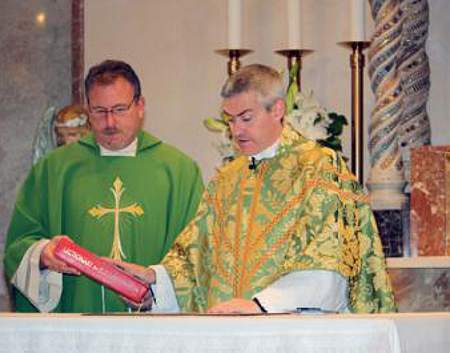
Dom Elias Carr er blitt sogneprest på Long Island

Litt forsinkede nyheter; om dom Elias – venn og kollega i Bergen – som 23/10 ble innsatt som sogneprest i St Rocco menighet på Long Isalnd. Nå har korherrene (endelig) etablert seg i USA. Jeg fant nyheten i The Long Isalnd Catholic:
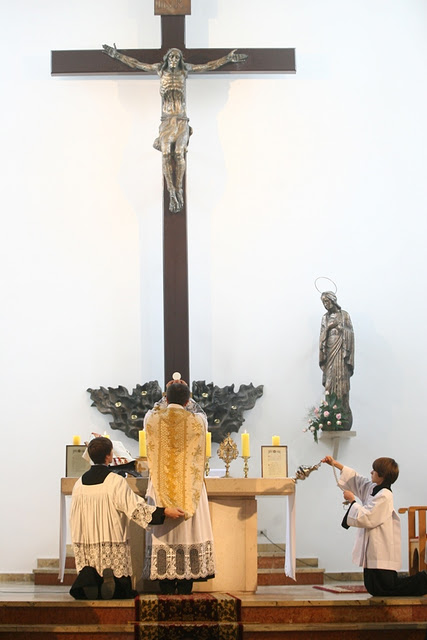
Father Elias Carr, Can. Reg., was installed as 10th pastor of St. Rocco’s Parish, Glen Cove at Mass on Sunday, Oct. 23. Area dean Father Robert Romeo presided. Father Elias is a member of the Canons Regular of St. Augustine, a religious order of priests from Austria. Three members of the Canons Regular began staffing the neighboring Glen Cove parishes of St. Rocco’s and St. Patrick’s in June. Although the Canons are from Klosterneuburg, near Vienna, the priests assigned here are all Americans. …

TLM for første gang i en menighet – eksempel fra Polen

Fr Tim Finigan (i England) skriver på sin blogg:

For those of us who have the blessing of the usus antiquior regularly for some time now, it is a reminder of the patient work needed to bring about the re-sacralisation of the Liturgy especially through the enrichment that the old Mass can bring.

Deretter gjengir han beskrivelse fra Polen, der et ektepar gjerne ville ha en tradisjonell messe feiret på sin 15 års bryllupsdag, hvordan de fikk tillatelse av sognepresten, fikk hentet en prest fra en annen by, samt kantor og minstranter, og slik fikk feiret den tradisjonelle messen for aller første gang i denne 30 år gamle kirken. Les gjerne hele beskrivelsen selv HER.

Ordinariatet opprettes i USA 1. januar 2012

De amerikanske katolske biskopene har sin konferanse denne uka, og i går fortalte kardinal Wuerl – erkebiskop i Washington DC, og ansvarlig for å legge til rette for anglikanske prester og lekfolk som øsnker å bli katolikker og samtidig få beholde noe av sin kirkelige tradisjon – at så langt har 67 anglikanske/episkopale prester søkt om å få bli katolske prester, halvparten av disse har så langt fått klarsignal fra Vatikanet, og nå har pave Benedikt også fastsatt en dato for når Ordinariatet skal opprettes:

On October 29, 2011, I received a letter from His Eminence Cardinal William Levada, Prefect of the Congregation for the Doctrine of the Faith, indicating that “in an audience granted to me on October 28, 2011, Our Holy Father, Pope Benedict XVI, has approved the erection of an Ordinariate in the United States. I therefore write to authorize you as this Congregation’s Delegate for the implementation of Anglicanorum coetibus to address the plenary session of the United States Conference of Catholic Bishops, due to meet in Baltimore…in order to advise the Bishops of these developments.”

The Congregation has communicated that the canonical erection of the Ordinariate will take place on January 1, 2012, the Solemnity of Mary, Mother of God. At that time, I assume that an Ordinary will be named and the Ordinariate will begin its work. …

Les hele kardinal Wuerls orientering til bispekonferansen.

Den hellige Albert den store

I dag leste jeg følgende om den hellige Albert den store (1208-1280) til matutin:

Albert, called the Great, because of his unusual learning, was was born at Lauingen on the Danube in Suabia and carefully educated from his boyhood. He left his country to study in Padua. While he was there he applied to entrance to the Dominicans. His uncle protested futilely against this step, but Blessed Jordan, master general of the Order of Preachers, encouraged it. When Albert had joined the friars, he was shining example of religious observance and devotion. He loved the Blessed Virgin Mary above all and burned with zeal for souls. To complete his studies he was sent to Cologne. Then he was made to professor at Hildesheim, at Freiburg and Ratisbone and at Strasburg. In the master’s chair at Paris, he earned a high reputation. He had Thomas Aquinas for his beloved disciple and was the first to perceive and predict the loftiness of his intellect. At Anagni, in the presence of the Pope Alexander IV, he refuted William, who had wickedly attacked the mendicant orders. Later he was made bishop of Ratisbone, where, in giving counsel and in settling disputes, he worked such wonders, as to deserve the title of peacemaker. He wrote many things about almost all branches of learning, especially the sacred sciences, and composed some famous works about the wonderful Sacrament of the altar. Famous for his virtues and for his miracles, he died in the Lord in the year 1280. By the authority of the pope a cult had long since been granted him in many dioceses and in the Order of Preachers, when Pius XI, willingly acceding to the desire of the Sacred Congregation of Rites, gave him also the title of Doctor and extended his feast to the Universal Church. Pius XII appointed him the heavenly patron with God of all those who study the natural sciences.

Katolsk.no har en grundig artikkel om den hellige Albert, der de bl.a. skriver:

… den mest berømte eleven (hans) var en ung italiensk mann ved navn Tommaso d’Aquino, mer kjent som den hellige Thomas Aquinas, som studerte hos Albert i fire år, først i Paris og deretter i Köln. Albert innførte Aristoteles’ system i teologien, og det er som banebryter for dette systemet i høymiddelalderens filosofi og teologi at han har størst betydning. Han la der grunnlaget som Thomas Aquinas bygger på. Thomas skulle videreutvikle sin lærers tenkning og bli en av de største skolastikere i middelalderen. Albert var den første vestlige teolog som gjorde et skarpt skille mellom tro og fornuft, og understreket begges verdi. …

Kommunion under begge skikkelser – fra USA

Jeg leste nylig om regler for når de troende kan motta kommunion under begge skikkelser, fra Phoenix, Arizona. Biskop Thomas Olmsted har i det siste prøvd å begrense bruken av kommunion under begge skikkelser – i USA har man typisk 10-12-14 ekstraordinære kommunionsutdelere og 6-8 kalker med Kristi blod i store menighetsmesser – men ser ikke ut til å lykkes med dette. Den samlede bispekonferansen i USA oppfordrer ganske sterkt til kommunion under begge skikkelser, og selv om biskop Olmsteds nye normer (under) på en måte er tydelige nok, så vil de nok ikke få særlige konsekvenser. Dette skriver han:

Conditions for the use of Holy Communion under both kinds:

i. The faithful present at Mass are properly catechized and continually receive catechesis regarding the dogmatic principles on the matter laid down by the Ecumenical Council of Trent.

ii. The ordinary ministers (i.e., priests and deacons) are able to purify all the sacred vessels either during or immediately following Dismissal of the people at the conclusion of the Mass.

iii. There exists not even a small danger of the sacred species being profaned.

iv. There is not such a large number of communicants that it is difficult to gauge the amount of wine for the Eucharist. There is no danger that more than a reasonable quantity of the Blood of Christ remains after distribution of Holy Communion.

v. There is an adequate number of ordinary ministers of Holy Communion for the distribution of Holy Communion. When this is not the case, there is an adequate number of properly deputed and trained extraordinary ministers of Holy Communion.

vi. The role of the Priest and Deacon as the ordinary ministers of Holy Communion is not obscured by an excessive use of extraordinary ministers of Holy Communion; the bond between the ministerial priesthood and the Eucharist is clearly manifest.

vii. There are no health concerns such as influenza or some other contagious disease that would deter the faithful from approaching the chalice.

viii. “The chalice should not be ministered to lay members of Christ’s faithful where…a notable part of the people continues to prefer not to approach the chalice for various reasons, so that the sign of unity would in some sense be negated.”

Jeg hadde tenkt å skrive noen private kommentarer til dette, men det får komme senere,

Si iniquitátes observáveris, Dómine, Dómìne, quis sustinébit?

«Dersom du vil se på misgjerninger: Herre, hvem kan da stå seg? For hos deg er tilgivelsen, Israels Gud. Fra det dype roper jeg til deg, Herre; Herre, hør min røst.»

Slik lyder inngansverset i søndagens messe (13/11 er 22. søndag etter pinse i den gamle kalenderen), og her er tekstene:

Filipperne 1:6-11
Brødre, jeg er viss på at han som begynte den gode gjerning i dere, vil fullføre den til Jesu Kristi dag. Det er også rett at jeg tenker slik om dere alle; for jeg bærer dere i mitt hjerte, og dere har alltid del i min glede, både i mine lenker og når jeg forsvarer og stadfester Evangeliet. For Gud er mitt vitne hvor jeg lengter etter dere alle i Jesu Kristi hjerte. Og det ber jeg om at deres kjærlighet mer og mer må øke i kunnskap og forstand, så dere velger det beste og er rene og ikke til forargelse, til Kristi dag, fulle av rettferdsfrukt ved Jesus Kristus, Gud til ære og pris.

Matt. 22:15-21
På den tid gikk fariseerne bort og holdt råd om hvorledes de kunne fange ham i tale. Og de sendte sine egne disipler sammen med herodianerne til ham og lot dem si: «Mester, vi vet at du taler sant og lærer Guds vel i sannhet og ikke bryr deg om noen; for du gjør ikke forskjell på folk. Si oss hva du mener: Er det tillatt å gi keiseren skatt eller ikke?» Men da Jesus kjente deres ondskap, sa han: «Hyklere, hvorfor frister dere meg? Vis meg skattens mynt.» De rakte ham da en denar. Og Jesus sier til dem: «Hva er dette for et bilde og innskrift?» De sier til ham: «Keiserens.» Da sier han til dem: «Så gi da keiseren hva keiserens er, og Gud hva Guds er.»

Les mer om messen søndag kl 19.00 her.

Ut intercessione beati Martini contra omnia adversa muniamur.

Slik leste jeg i dag til Matutin på festen for den hellige Martin av Tours:
Martin, born in Sabaria at Pannonia, was ten years old, when against his parents’ wishes he went to a Church and asked to be enrolled the catechumens. At fifteen he enlisted as soldier, and served first in the army of Constantius, and then in that of Julian. At eighteen, when he had given part of his cloak to a poor man at Amiens, he was strenghten by a wonderful apparition of Jesus Christ an eagerly received baptism. Then leaving the military life, he was received among the acolythes of Hilary, the bishop of Poitiers. Later made bishop of Tours, he built a monastery, where with eighty monks he lived in a most holy way for some time. When he was seized with severe fever at Candes, a village of his diocese, he had pity on his disciples, and thus prayed to God: «Lord, I am still necessary for your people, I will not refuse the labor.» Shortly after, when death was imminent, the enemy of mankind appeared him. «Why are you here, cruel beast?», said Martin. «You will find no deadly sin in me.» With those words he gave back his soul to God at the age od eighty one, famous for many miracles.

En mer verdig messefeiring – på engelsk

Det er bare to uker til den nye engelske messeoversettelsen skal tas i bruk – og Jeffrey Tucker skriver begeistret om dette:

… The language is completely different. What previously was choppy and plain is now extended and elegant. Options for prayers that aren’t even in the Latin edition have been eliminated. The incessant talk about “peace and love” that reflected the political-cultural concerns of 1970 are gone and replaced by actual English equivalents of the Latin. The language is generally higher and more prayerful. The text sounds like liturgy, sounds like Church, sounds like prayer, and the attempt to render all of this in dress-down-Friday prose is completely gone.

The overall effect is about more than the text, as important as that is. The really substantive change concerns the overall ethos of the Mass that will come through in the new language. It is serious, solemn, dignified, and even a bit remote in the way that mysterious and awesome things really should be. The sentence formulations are not like vernacular. They are elevated but without being affected.

Den nye oversettelsen vil også få betydning for musikken i messen, skriver Tucker, og der trengs det virkelig en revolusjon i de fleste engelskspråklige menigheter – ofte er ikke-katolikker blitt skikkelig sjokkert når de har overvært en katolsk messe, skriver han:

The biggest evidence of this change concerns the music. There is a long history in the Catholic Church of missteps in this regard. … The people involved in the production of the English version of the Third Edition of the Roman Missal got it right. They embedded the music as part of the text. You can hardly turn a page in this Missal without bumping into musical notation. This is just fantastic because it establishes a norm for both tunes and for the preferred style of the music to be used at Mass. This style is call chant. The prayers are all chant. The people’s parts are chanted. ….

This is just great because it solves a serious and major problem that currently exists within the Catholic Church: the music that is commonly employed in the liturgy works at cross purposes with the ritual itself. The establishment of a new (actually old) musical norm will have a gradual effect on the choices that the musicians make in the future. Pop music will not fit in well with a chanted Mass. There will be a gravitational pull toward making the entire Mass a chanted event, thereby fulfilling one of the goals of the Second Vatican Council to grant chant “first place” at Mass.

Now, in talking about these issues with reporters, I’ve noticed something that Catholics rarely talk about. The existing problems in the musical area are well known by these reporters. They’ve variously attended Mass with the expectation of hearing chant but come away with a sense of alarm or even shock that this is not what they heard. They tell me nightmare stories I’ve heard a thousand times, stories of amateur guitar quintets that strum away from the altar, stories of bongos and electric basses and trap sets, stories that make your hair stand on end and make you want to hide from embarrassment.

In some way, all these reporters, Catholic or not, are rooting for a dramatic change. They want the Catholic Church to be true to itself. …

Ambisiøs foredragsserie om Vatikankonsilet – i Stockholm

Andra Vatikankonciliet, ett femtioårsjubileum
Föreläsningar i Dominikansystrarnas lokal, Västmannagatan 83, Stockholm

I Stockholm startet dominikanerinnene nylig en lang foredragsserie om 2. Vatikankonsil, med i alt 20 foredrag. De planlegegr nok å holde på i flere år, side bare de tre første foredragene skal holdes i høst. Les mer om programmet og hvert foredrag her. Her er oversikten i kortversjon:

1. Andra Vatikankonciliet, en avslutad händelse eller historisk rörelse

2. 1789 – 1864 – 1907 – 1958 – 1968 – 1989, Andra Vatikankonciliet tolkat utifrån två hundra års historia

3. Nödvändiga fakta, kyrkopolitiskt och teologiskt fikonspråk för att förstå konciliet

4. Att skåla för samvetsfriheten framför påven, Andra Vatikankonciliet som John Henry Newmans koncilium

5. Kyrkans väsen och Johan Adam Möhlers betydelse för en ny kyrkosyn

6. Modernisternas rehabilitering, från fördömelse och uteslutning till ett erkänt inflytande

7. Tillbaka till källorna, om Traditionens förnyande kraft

8. Encyklikor som både bromsar och förebådar en ny tid

9. Ekumenik och aggiornamento, ”uppdatering”, konciliets ledmotiv

10. Ångest och framtidstro, kärnvapenkrig, berlinmur och avkolonialisering som konciliets bakgrundsbild
11. Kyrkan som en dialogisk process, från Johannes XXIII till Paulus VI

12. Kollegialitet och mänsklighetens enhet i mångfald, nyckelord som förvandlar

13. Alla ska med! Henri de Lubacs sociala frälsning och inklusivitetens begränsningar

14. Concilium och Communio, två tidskrifter som representerar två olika sätt att ta emot konciliet efter 1970

15. Den holländska katekesen och en ny liturgi

16. Enhetens sakrament bland utbrytare, heretiker, integrister och annat löst folk …

17. Glädjeämnen och förhoppningar, bedrövelse och ångest – de fattigas kyrka

18. Enkönat tolkningsföreträde i en tvåkönad och mångkulturell värld

19. Från manligt läroämbete till kvinnliga kyrkolärare, från självvald instängdhet till globalt resande

20. Dogmutveckling och annat onämnbart, vad återstår?

Ny bok som bør bestilles

I mars 2012 gir Ignatius Press ut følgende bok som absolutt bør bestilles: Benedict XVI’s Reform: The Liturgy Between Innovation and Tradition, by Nicola Bux. Amazon.com omtaler boka slik:

When Benedict XVI reestablished the celebration of the older Latin Mass, voices of protest rose up from many sides. The widespread fear was-and is-that the Pope had revealed himself as the reactionary defender of tradition that many have accused him of being since he was the prefect of the Congregation for the Doctrine of the Faith, the former Holy Office.

Defenders of Benedict XVI have responded to these objections by explaining that the use of the Tridentine Rite is not a «step backward» to pre-Vatican II times, but rather a step forward. Now the Church can see what the older rite offered in terms of beauty, reverence, and meaning and perhaps desire more of those elements in the ordinary form of the Mass.

A professor of theology and liturgy, the author of this book explains the motives behind the Pope’s decision to allow two forms of the Mass. He does this by turning to the Pope’s own theological and liturgical writings, but he also draws from his experiences on various Church commissions and in offices of the Roman Curia.

The author also brings to his subject an astute understanding of current social and spiritual trends both inside and outside the Church. Sensitive to modern man’s hunger for the sacred, he desires with Pope Benedict XVI that the Mass be first and foremost a place of encounter with the living God.

Tradisjonell messe i Peterskirkens sakramentskapell

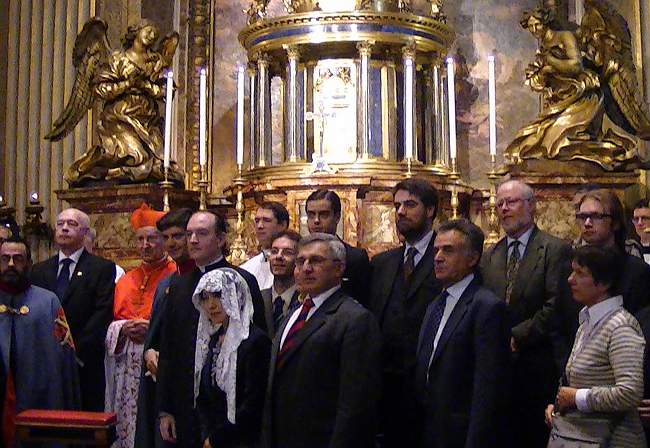
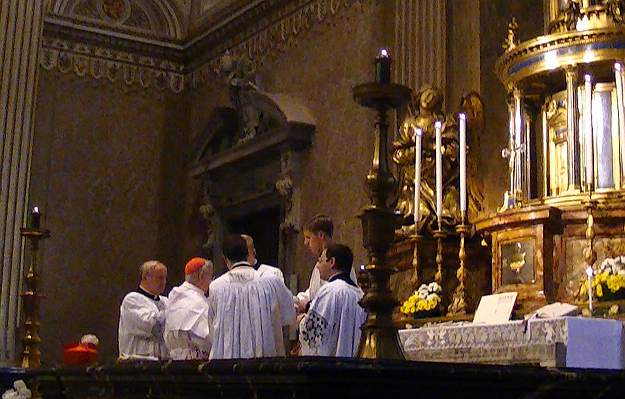
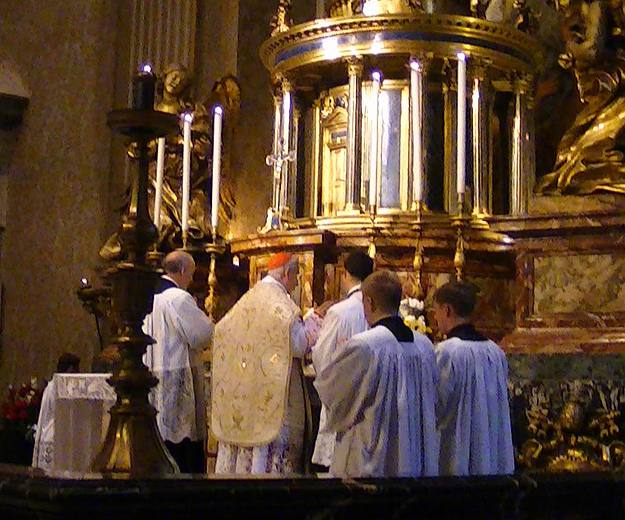
Kardinal Castrillon Hoyos feiret lørdag 5/11 en pontifikal lavmesse i Peterskirkens sakramentskapell – for deldakere i Una Voces generalforsamling. Jeg fant følgende tekst og bilder av messen her:

… the historic Pontifical Low Mass celebrated by Cardinal Castrillon Hoyos for the delegates of the XXth FIUV General Assembly in the Blessed Sacrament Chapel. In his sermon His Eminence paid tribute to the important work of the FIUV but said that our primary work was in trying to make the voice of the Holy Father heard on the question of the true value and liberty of the Extraordinary Form of the Roman Rite.

Hjelp til å følge med i messen – i 1958

Når jeg nå ser på hvordan barn og voksne deltok i messen før 1960, kom jeg over et innlegg jeg postet på min blogg for nesten to år siden. Der skrev jeg bl.a.: Jeg har i det siste sett litt på BARNAS BØNNEBOK, utgitt på St Josephs institutt i 1958, med imprimatur fra biskop Mangers. … Boka inneholder også seks ulike oppsett av den hellige messen, som skal hjelpe barna til å følge med i messen (husk at man den gang brukte den tradisjonelle messen på latin). Den første av disse messene kan man se her (pdf-fil).

Jeg skal se litt mer på dette når jeg får tid – om mulig få skannet inn hele boka og gjøre den tilgjegelig i tekstformat.

Pontifikal høymesse i Amsterdam – kardinal Burke

Søndag feiret kardinal Raymond Burke en pontifikal høymesse i FSSPs kirke, St Agnes, i Amsterdam, Den lokale biskop Joseph Punt deltok i messen og holdt prekenen. I videoen under kan man se (den meget høytielige, som det blir når en kardinal er med) utgangsprosesjonen.

Les om dette p Rorate Cæli, og se mange bilder HER og HER.

Om å delta aktivt i (den tradisjonelle) messen

Et eksempel på hva man arbeidet med i Kirken før 1960; at menigheten skulle delta i messen på en passende måte, siterer jeg fra kapittel 8 i P. Boers bok fra 1945 om katolsk praksis:

Om aktivt å ta del i messen.

Det finnes bare en rett og riktig måte å overvære messen på. Vi må aktivt og personlig ta del i den ved å frambære messeofret i forening med Kristus og den forrettende prest.

Først og fremst i forening med Kristus. Offergaven i messen er Jesus Kristus. Under messens hellige offerhandling må du derfor først ofre Jesus til den himmelske Fader for å tilbe Ham, takke Ham, be Ham om nåde og miskunn og yte Ham fyldestgjøring for dine synder. Men du må huske på at offergaven i messen er ikke bare Jesus i sin individuelle personlighet. Kristus og Hans Kirke – som er «vi» – er jo ett. Når Kristus ofrer seg på ny under messens ritus blir vi alle ofret med Ham, – du også. Derfor må du personlig samtykke i å bli ofret med Jesus, du skal under messens offerhandling ofre deg selv sammen med Jesus til den himmelske Fader, og det på en praktisk måte. Du må ofre ditt daglige arbeide, dine vanskeligheter i dagens og ukens løp, dine lidelser, dine sorger og dine gleder, i ett ord: hele ditt liv.

Venner du deg til å ta del i messen på denne måten, da vil det gjøre hele ditt liv til en messe – ditt kristne liv lever du da i messeofrets kraft og nåde og ditt sinn blir mer og mer forvandlet til Kristi sinn.

Du skal imidlertid også frambære messeofret i forening med presten som forretter. Ta derfor din bønnebok – helst din messebok – i hånden og fordyp deg i den hellige handling ved å følge med i de tekster presten leser og de seremonier han utfører. Da først lærer du å utdype og fatte den hellige offerhandling og du blir ikke bare en tilhører eller et øyenvitne, men, som det seg hør og bør, en medofrende. Søk som medofrende å være så nær altret som mulig under messen. Finn deg en plass i en av benkene, helst fremme i kirken. De siste benker skal du overlate til anderledes-troende, som helst vil være ubemerket.

Som medofrende bør du overvære hele messen. Kom derfor i god tid til gudstjenesten – om søndagen før «Asperges me»! – Styrt ikke på dør straks presten har forlatt altret. Vent til han er gått inn i sakristiet eller, hvis det er høymesse, vent til sluttsalmen er sunget. Våre gudstjenester er ikke av lengre varighet enn at alle har tid til å ta del i dem fullt ut.

Paven til vesper i Serra San Bruno

Pave Benedikt deltok nylig i en vesper i Chiesa della Certosa i Serra San Bruno i Calabria. På the Chant Cafe (der jeg fant denne informasjonen) omtales musikken slik: «Here is a beautiful example of music in service of the Word – and contrary to what people believe, that music need not be complex. It only needs to assist in the prayer.»

Klikk på denne youTube-linken og alle videoene fra vesperen skal dukke opp – en etter en.

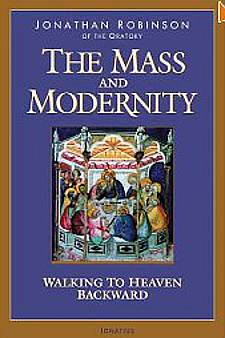
Messen og den moderne tid: Aktiv deltakelse i messen

På slutten av boka “The Mass and Modernity”, skriver P. Jonathan Robinson også ganske tydelig om hva «aktiv deltakelse» i messen betyr. Det betyr ikke at man skal gjøre noe spesielt – bortsett fra å svare presten når
liturgien sier at man skal det, og gjerne delta i lovsangen i messens ordinarium og hymner – men det betyr at man skal følge messens hellige handling med et oppmerksomt sinn. Slik skriver han (om feilene Vatikankonsilet måtte rette opp):

… If we are going to understand how the phrase was used by those who developed its usage, we should understand that it was not something new introduced by the Council; in fact, it was used by Pope Pius X in a motu proprio entitled Tra le Sollicitudine (1903). The document is about sacred music and in it the saint asked for an «active participation in the mysteries and in the public and solemn prayer of the Church». Pius X himself, however, was drawing on an earlier Lradition. Dom Alcuin cites Dom Lambert Beaudoin, one of the pioneers of the Liturgical Movement, who stated in the early years of the twentieth century that one of the principal aims of the movement was «The active participation of the Christian people in the holy Sacrifice of the Mass by means of understanding and following the liturgical rites and texts».

We could have no clearer statement of the meaning of active participation at the outset of the Liturgical Movement. Active participation is essentially contemplative, and in no sense is it primarily concerned with our doing things in or to the Liturgy. Active participation is a state of being contemplatively connected to the profound actions of the Sacred Liturgy, and from that privileged encounter we receive grace.

Since the Council the phrase has been used by many as though it were the most important reform the Council introduced, and it has been used to judge every liturgical practice. It would seem that this use of active participation as the ultimate standard for liturgical life is wrong; but if the Council was not teaching that everyone at Mass should be, at least ideally, saying and doing everything that everyone else says, sings, or does, then what was it asking for? It would seem to be the ease that in insisting that there should be active participation, the Council was making the theological point that the liturgy is essentially an action done by the whole community and that it involves both God and am. …. The sort of thing the Council did want to put an end to, for example, was the practice, still very much alive before the Council, of the laity saying the rosary together out loud during the celebration of Mass in October. The mysteries of the rosary thus became the object of devotion put in front of the laity and really were a barrier to any full, conscious, and active participation in the mysteries of the Eucharist. Participating in the Mass, that is, was almost impossible, even with a Latin-English missal. We tend today to take it so much for granted that the focus of the worshipper’s attention must be the Mass itself, and that other devotions and interests must play a subsidiary role, that it is easy to forget that this was not always the ease. The Council’s insistence on active participation must be understood as a much-needed reform. …

Messen og den moderne tid: Messen et møte med Gud

Jeg nevnte nylig boka “The Mass and Modernity” av P. Jonathan Robinson. Der innleder han et oppsummerende kapittel slik:

I will now spell out some of the consequences of my contention that the celebration of the Novus Ordo must be developed to include characteristics of the Old Rite. The most important of these characteristics is the capacity of the Old Rite to teach the transcendence of God and at the same time to inculcate a sense of Christ’s salvific work in the Mass through the operation of the Holy Spirit. The Old Rite does this in a variety of ways that lead the worshipper beyond the immediate ceremonies of the Rite itself to a contemplative encounter with «the nameless God of many names».

By contemplative here I mean an experience that is a largely wordless, serene, and attentive prayer to the presence of God. There is nothing extraordinary about this, and it is common to most people who pray and participate in the sacraments; the development of their prayer follows the traditional map of progress in prayer that is to move from the complex to the more simple. At the beginning, prayer consists in petition, meditation, and thanksgiving; but as it develops, it becomes less and less a matter of words, acts of the imagination, and motions of the will and develops into a loving attention to God ….

… This sort of prayer is not a substitute for liturgical prayer, but liturgical prayer should lead to it, and there ought to be enough silence and serenity in liturgical celebrations to allow it to develop. The liturgy is not supposed to lead to a mindless submersion of the individual in a communal experience; it should, on the contrary, leave the individual with a heightened sense of his own self and lead him deeper into the mystery of the God who revealed himself in Jesus Christ and who shares himself with us in the sacraments.

It is not solely the verbal aspects of the Mass that should help to develop this contemplative attitude. In the Eucharist the reality of the presence of the Paschal Mystery is impressed on the worshipper by the structure of the rite itself, by the position of the priest for the Eucharistic Prayer, by the choice of the readings from Scripture, by the use of a formal archaic language (Latin), as well as by the controlled movements and gestures of the officiants; and all these characteristics of the Eucharist help to develop the contemplative attitude. It is from this perspective on liturgy that von Balthasar speaks of the liturgical attitude as one «silent, recollected adoration».

A supporter of a more community-oriented liturgy ought to be quite willing to admit that the Old Rite did in fact encourage a liturgical attitude of «silent, recollected adoration» and that this is precisely what was wrong with it. …

Skroll til toppen