Forbedring av liturgien – og den gamle messen
En engelsk prest skriver på sin blogg at liturgien i løpet av bare noen få år er blitt mye bedre – roligere og mer fokusert på Gud:
A strange thing is going on in the Church at the moment. Former liturgical enemies seem to be reconciling, lions lie down with lambs, all that sort of thing.
Going back a mere handful of years—well within the lifetime of this blog, at least in its earlier incarnation—the lines of battle were well drawn between those faithful Catholics who thought we should adhere faithfully to the liturgical books of Paul VI, and ‘those attached to the former books’, as Pope John Paul put it.
Now, of course, it is not a case of ‘former books’, for Pope Benedict has made both forms of the Roman Rite perfectly current, hoping, it is said, to recreate the Roman Rite anew without legislation or coercion. It will take time, but it is beginning to work.
To begin with, there is the more solemn style of celebration that he has introduced. We saw some excellent examples during the Papal visit to the UK. Some grumbled at the less traditional aspects of the Masses at Bellahouston and Birmingham, but really they should be comparing the whole thing to the Masses during the visit of Pope John Paul. The atmosphere was entirely different, … …
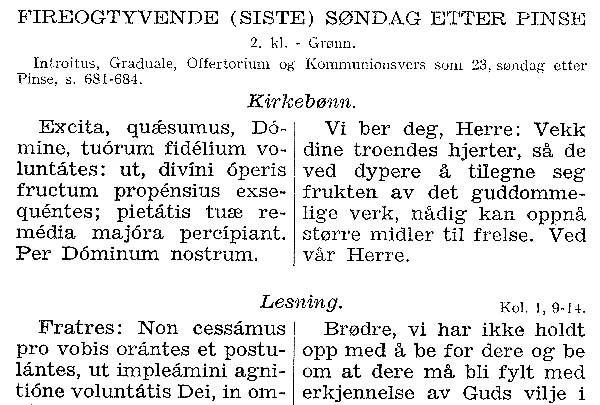
Ting skjer også ganske hurtig mht den tradisjonelle latinske messen, skriver han (men jeg kan ikke si at jeg ser dette i Norge så langt):
A few days ago, I met a brother priest at the seminary whom I had not seen for some time. He is, shall we say, not unknown in Catholic media circles. No, it isn’t Mgr Loftus. In passing he happened to mention to me that he was starting to celebrate the traditional Mass from time to time. I was taken aback, because although I am aware that this priest is on the more orthodox side of things, I had never associated him in any way with traddydom. He saw my surprise, and said quietly ‘yes, well, it’s the future, isn’t it?’
He’s not the only one. In one southern English diocese, about twenty per cent of the priests now celebrate the traditional Mass at least from time to time. Most of these are in their forties or younger. They haven’t stopped celebrating the Ordinary form as the norm, but, one might say that the Missa Normativa is no longer the Missa Formativa in their life or the life of their parish. I mean that behind their celebration of the Mass of Paul VI lies a positive experience of the Mass of Pius V ….
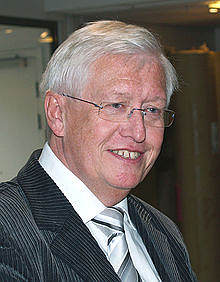
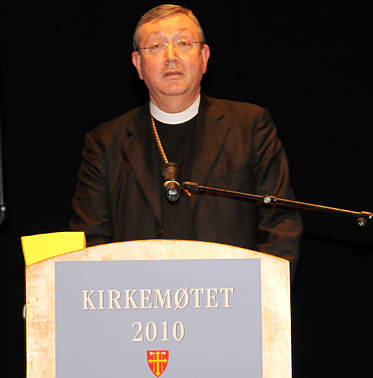 Vår egen biskop var på Den norske kirkes kirkemøte i går, og snakket varmt om de menneskelige relasjonene så nå fins mellom katolikker og lutheranere i Norge:
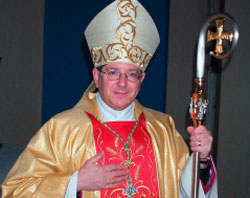 Én av de fem anglikanske biskopene som har annonsert at de vil konvertere, forteller at det var pave Benedikts brev Angecalorum Cætibus som forandret situasjonen: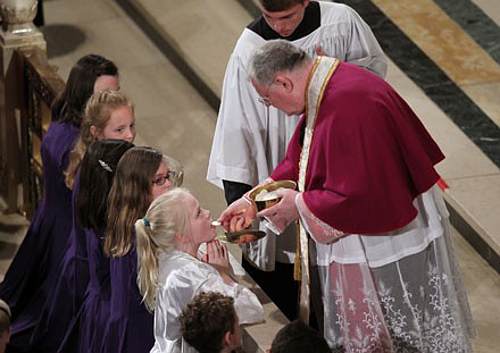
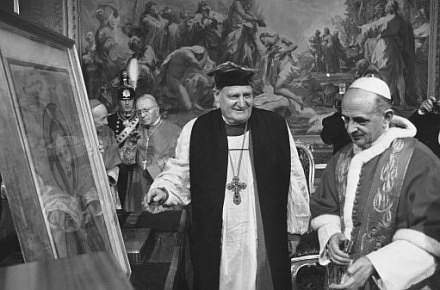 Etter Vatikankonsilet var det samtalene med anglikanerne (bildet over er fra 1966) som kom raskest i gang (og man må nok i dag kunne si at man var overoptimistiske), mens samtalene med lutheranere kom mer gradivis, men ble etter hvert svært fruktbare. Og til noen anti-økumener som av og til kommeneter på denne bloggen: Man misforstår nok pave Paul VI når man tolker hans uttrykk «united but not absorbed» som noe annet enn det jeg har skrevet over – at man på alle punkter godtar den katolske lære, men samtaidig kan få beholde tradisjoner som er forenlige med denne lære.