Katolsk

Fr Keith Newton leder det nye engelske ordinariatet

En av de tre tidligere anglikanske biskopene som sist uke ble ordinert til katolske prester, Fr Keith Newton, er av pave Benedikt valgt til leder av dette personlige ordinatiatet for tidligere anglikanere. Han hold en pressekonferanse i går, som kan høres her – DEL 1, DEl 2, og HØRES HER.

Selv om han ikke er (og ikke blir) biskop, har han på mange måter biskopelig myndighet, og kan bære ring, stav og mitra og delta med stemmerett i den engelske bispekonferansen. Men han må ut av huset der han og familien bor før 1. mars, han har så langt ingen lønn; han låner noen kontorer midlertidig, men så langt har de ingen kirke de kan bruke. Sammen med de to andre tidligere anglikanske biskopene (og biskop Hopes) skal han forberede opptakelsen av flere titalls anglikanske prester og kanskje 30 grupper med lekfolk – som skal foregå fra askeonsadg fram til pinse.

Mer om hvordan Vatikankonsilet skal tolkes

I en lang artikkel, som kan leses her, skriver Sandro Magister om en konferanse som ble arrangert i Roma i desember 2010 , som studerte hvordan man kan komme fram til en «a correct hermeneutics of the Council in the light of Church Tradition». Der sa bl.a. biskop Athanasius Schneider bl.a. følgende om liturgien (etter først å ha nevnt frigjøringsteologien som en annen feiltolkning):

… For a correct interpretation of Vatican Council II, it is necessary to keep in mind the intention manifested in the conciliar documents themselves and in the specific words of the popes who convened and presided over it, John XXIII and Paul VI.

Moreover, it is necessary to discover the common thread of the entire work of the Council, meaning its pastoral intention, which is the «salus animarum,» the salvation of souls. This, in turn, depends on and is subordinate to the promotion of divine worship and of the glory of God, it depends on the primacy of God.

This primacy of God in life and in all the activity of the Church is manifested unequivocally by the fact that the constitution on the liturgy occupies, conceptually and chronologically, the first place in the vast work of the Council. …

… One interpretation of rupture of lighter doctrinal weight has been manifested in the pastoral-liturgical field. One might mention in this regard the decline of the sacred and sublime character of the liturgy, and the introduction of more anthropocentric elements of expression.

This phenomenon can be seen in three liturgical practices that are fairly well known and widespread in almost all the parishes of the Catholic sphere: the almost complete disappearance of the use of the Latin language, the reception of the Eucharistic body of Christ directly in the hand while standing, and the celebration of the Eucharistic sacrifice in the modality of a closed circle in which priest and people are constantly looking at each other.

This way of praying – without everyone facing the same direction, which is a more natural corporal and symbolic expression with respect to the truth of everyone being oriented toward God in public worship – contradicts the practice that Jesus himself and his apostles observed in public prayer, both in the temple and in the synagogue. It also contradicts the unanimous testimony of the Fathers and of all the subsequent tradition of the Eastern and Western Church. …

Møtet mellom religiøse ledere i Assisi i oktober

1. januar kunngjorde pave Benedikt at han ville invitere ledere fra mange religioner til et nytt møte i Assisi i oktober i år, 25 år etter at et lignende møte først ble arrangert der, av pave Johannes Paul II. Noen likte dette første møtet godt, og andre mislikte det kraftig; fordi de mente det var altfor åpent for synkretisme. På www.chiesa kan vi lese om dette:

… Professor Roberto de Mattei … has joined other Catholic figures in signing an appeal to the pope that the new meeting in Assisi «not reignite the syncretistic confusion» of the first, the one convened on October 27, 1986, by John Paul II in the city of Saint Francis.

In effect, in 1986, then cardinal Joseph Ratzinger did not go to that first meeting, of which he was critical. He did, however, take part in a repeat of it held also in Assisi on January 24, 2002, agreeing «in extremis» after being assured that the mistakes of the previous meeting would not be made again.

The main mistake fostered by the meeting in Assisi in 1986 was that of equating the religions as sources of salvation for humanity. Against this error, the congregation for the doctrine of the faith issued in 2000 the declaration «Dominus Iesus,» reaffirming that every man has no other savior than Jesus.

But also as pope, Ratzinger has again warned against the confusion. In a message to the bishop of Assisi dated September 2, 2006, he wrote:

«In order not to misunderstand the meaning of what John Paul II wanted to accomplish in 1986, and what, in his own words, is described as the ‘spirit of Assisi’, it is important not to forget the attention that was paid at that time to prevent the interreligious prayer meeting from being subjected to syncretistic interpretations founded upon a relativistic conception. […] For this reason, even when we gather together to pray for peace, this prayer must be carried out according to the distinct approach that is proper to each of the various religions. This was the decision in 1986, and this decision cannot but remain valid today as well. The coming together of those who are different must not give the impression of a concession to that relativism that denies the very meaning of truth and the possibility of attaining it.” …

Pave Benedikt tok opp dette temaet på nytt igjen i Assisi i 2007 – les mer om dette hos www.chiesa.

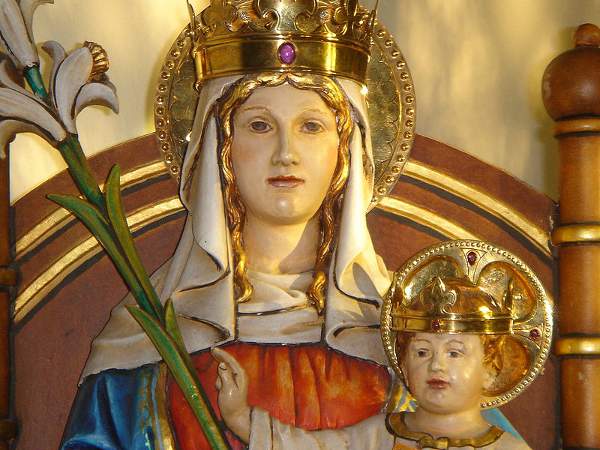
The Personal Ordinariate of Our Lady of Walsingham

Som ventet opprettet pave Benedikts i dag et ‘personlig ordinariat’ for Den katolske Kirke i Engalnd & Wales. The Catholic Herald skriver om dette:

… The Congregation for the Doctrine of the Faith has issued a Decree of Erection which officially founds an ordinariate in England and Wales. It will be known as the Personal Ordinariate of Our Lady of Walsingham, under the protection of Blessed John Henry Newman. The Ordinary, or head, of the ordinariate will be Fr Keith Newton. …

… Members of the ordinariate will be fully fledged Catholics of the Roman Rite. Ordinariate priests will be able to celebrate Mass freely in Catholic churches and Catholics attending ordinariate Masses will be able to receive Communion there.

Jeg har selv vært i Walsingham (nordøst for London), men kjenenr ikke (fromhets)tradisjonen der særlig godt. Les gjerne om stedet på Wikipedia.

Bilder fra diakonvielsen torsdag

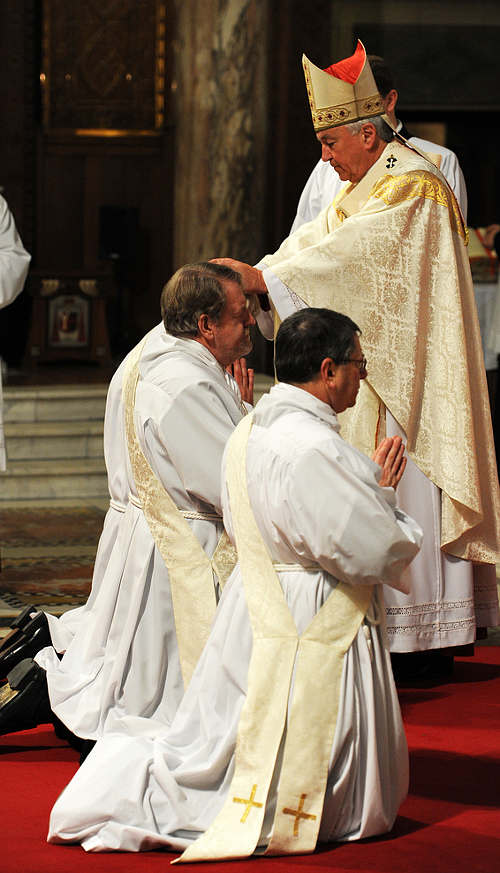
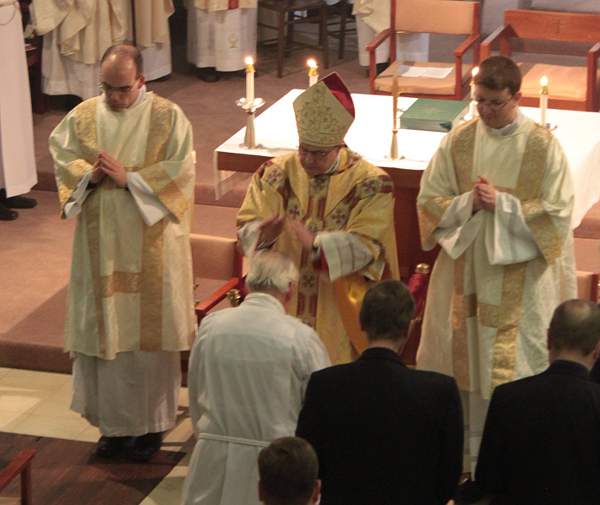
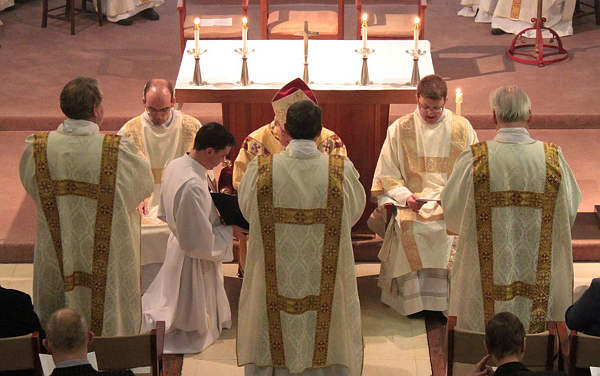
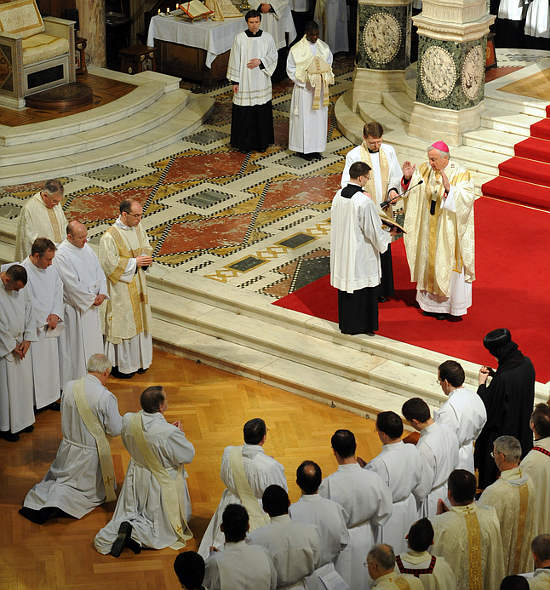
På det første bildet blir John Broadhurst ordinert til diakon i Den katolske Kirke av biskop Alan Hopes, på bilde nummer to står han ikledd dalmatika sammen med de to andre tidligere anglikanske biskopene.


Diakonvielsen(e) foregikk i kapellet til presteseminaret Allen Hall i London, der jeg selv om mange av prestene i Oslo katolske bispedømme har studert.

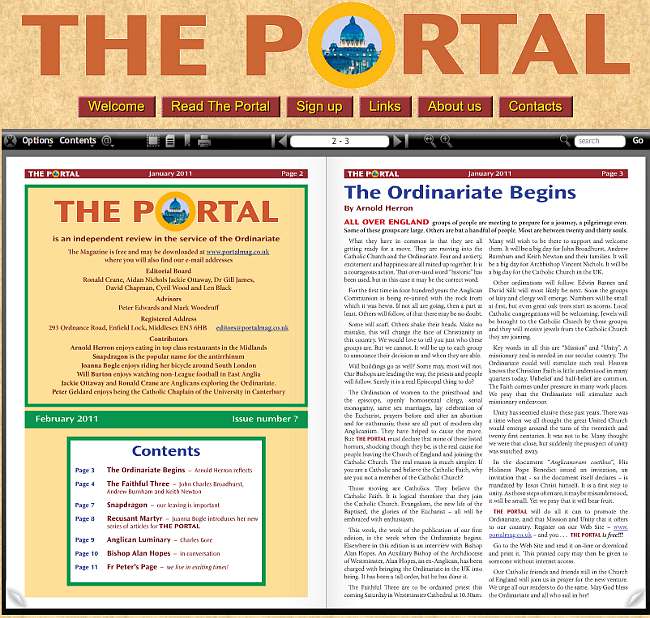
Jeg har lest om dette på The Ordinariate Portal; HER, HER, HER, HER og bildene HER.

Diakonvielser i dag, prestevielser lørdag

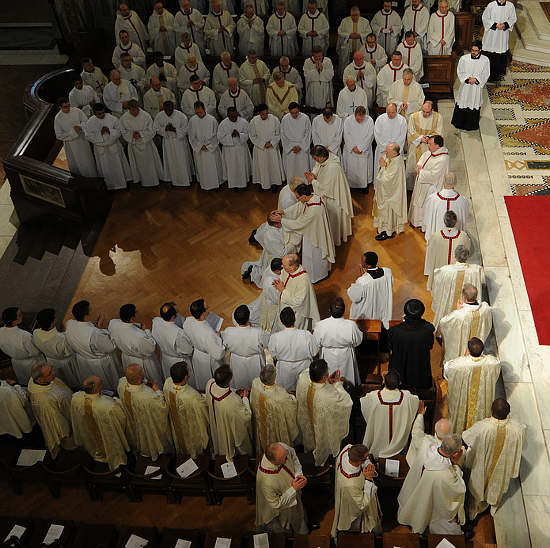
I dag vil tre tidligere anglikanske biskoper (som ble opptatt i Den katolske Kirke 1. januar) bli diakonviet, og lørdag vil de bli presteviet av erkebiskop Nichols i Westminster Cathedral i London. Og på lørdag eller litt før vil den formelle strukturen rundt disse prestene (‘ordinariatet’) bli opprettet – og deretter kan i alle fall to anglikanske biskoper til, mange prester, og tusenvis av troende strømme inn.

På Den katolske Kirkes offisielle sider for Enagland & Wales kan vi lese følgende:

… Already, three former Anglican Bishops have been received, together with some members of their families and three former Anglican women religious, into full communion with the Catholic Church on 1 January 2011. With the permission of the Holy See, they will also be ordained as Catholic Priests on 15 January 2011. A further two retired former Anglican Bishops will be received into full communion with the Catholic Church and proceed to Ordination as Catholic Priests in due course. …

Vi kan også lese:

… On or before 15 January 2011, it is expected that the Congregation for the Doctrine of the Faith will publish a Decree which will formally establish a ‘Personal Ordinariate’ in England and Wales (from here on referred to as ‘the Ordinariate’) for groups of Anglican faithful and their clergy who wish to enter into full communion with the Catholic Church.

The establishment of this Ordinariate will be the first fruit of the Apostolic Constitution Anglicanorum coetibus, issued by Pope Benedict XVI on 4 November 2009. The Constitution and the Complementary Norms published by the Congregation for the Doctrine of the Faith provide the essential norms which will enable members of the Ordinariate to preserve within the Catholic Church those elements of Anglican ecclesial prayer, liturgy and pastoral practice (patrimony) that are concordant with Catholic teaching and which have nurtured and nourished their Christian faith and life.

In time, it is expected that further Ordinariates will be established in other parts of the world to meet the desire of those Anglican communities who in a similar way seek to be united in communion with the Successor of St Peter. …

Festen for den hellige familie – dobbelt opp

Søndag etter jul feiret vi festen for den hellige familie, og jeg holdt en preken (husker jeg) der jeg la spesiell vekt på den hellige Josef. Men i dag feirer vi samme fest på nytt igjen (når vi følger den tradisjonelle kalenderen), og på katolsk.no får vi forklaringen:

… Mot slutten av 1800-tallet opplevde man en krise i familieliv og moral, og ekteskapslovene begynte å endres, blant annet med skilsmisselover. Kirken tok opp kampen på mange områder, og på det liturgiske område ga det seg utslag i at Festen for Den hellige Familie ble innført i 1893 av pave Leo XIII (1878-1903). Den ble lagt til tredje søndag etter Herrens Åpenbaring, det vil si mot slutten av januar. Men feiringen var valgfri, og ble bare innført i de bispedømmer som spurte Roma om å få lov til det.

I 1914 flyttet pave Benedikt XV (1914-22) festen til 19. januar, men i 1921 flyttet han den til første søndag etter Herrens Åpenbaring. Samtidig førte han den inn i den universelle kalender og gjorde den obligatorisk for hele Kirken. Etter nyordningen av den kirkelige kalender i 1969 feires dagen på søndag etter juledag. …

I kveld skal jeg fokusere mer på krisen i selve ekteskapet i vårt samfunn, og ta utgangspunkt i noe som skjedde sommeren 2008, da kampen mot den nye ekteskapsloven i Norge var på det mest intense – se gjerne innlegget jeg holdt på torget i Stavanger om dette.

Endelig kom den!

The Second Vatican Ecumenical Council: A Counterpoint for the History of the Council skrevet av erkebiskop Agostini Marchetto. Jeg bestilte boka i desember 2009, og hver måned har jeg fått beskjed om at den fortsatt ikke er klar, men i dag kom den altså – jeg gleder meg til å kaste meg over de 700 sidene.

Amazon.cu.uk sier selv om boka:

This important study by Archbishop Agostino Marchetto makes a significant contribution to the debate that surrounds the interpretation of the Second Vatican Ecumenical Council. Archbishop Marchetto critiques the Bologna School, which, he suggests, presents the Council as a kind of ‘Copernican revolution’, a transformation to ‘another Catholicism’. Instead Marchetto invites readers to reconsider the Council directly, through its official documents, commentaries, and histories. Marchetto’s volume will be a useful resource for graduate students, seminarians, and scholars interested in the theological significance of Vatican II.

Kardinal Burke snakker om abort, TLM og kommunion

Intervjuet med kardinal Raymond Burke (under) tar utgangspunkt i dagen det ble laget, 28/12, festen for de uskyldige barn i Betlehem, og snakker om problemet med abort i vår tid. Deretter tar kardinalen opp ganske grundig og saklig spørsmål rundt den tradisjonelle latinske messen og hvordan kommunion best bør mottas.

Har Kirken noen gang hatt kvinnelige diakoner?

I kommentarer til et innlegg som bare var en ren orientering om den tradisjonelle latinske messen i Oslo, kom det opp spørsmål om jenter som ministranter – og etter hvert også om kvinnelige diakoner. Der ble det sitert (som en akseptert sannhet, virket det som) en uttalelse fra mennesker som kjemper for ordinasjon av kvinner til prester i vår Kirke (womenpriests.org): “Kvinner ble gitt full ordinasjon som diakoner i den Første Kirke. Denne praksis er blitt dokumentert meget grundig for de ni første århundrene, spesielt i den østlige del av Kirken. ”

Jeg reagerte ganske spontant på den uttalelsen, som jeg ser på ikke som en akseptert sannhet, men som et partsinnlegg. Og det er vel egentlig slik at hvis kvinner virkelig ble ordinert (på linje med menn) til diakoner i Kirkens første århundrer, bør man også fortsette med dette i vår tid. Dvs. dette argumentet er svært viktig, ja avgjørende, for om kvinner kan ordineres til diakoner (noe Kirken offisielt sier at de ikke kan) i vår tid. Som en kort presentasjon av debatten om dette temaet (om hvordan forskere er uenige om hvordan informasjonen vi har skal forstås), tar jeg med noen utdrag fra Wikipedia:

… The ordination of females to the diaconate is a matter of some controversy among Roman Catholic historians and theologians. At issue are two distinct but interrelated questions: whether some women in the early Church received true sacramental ordination, or whether all were merely so called for functional or honorific purposes; and, whether the prohibition against ordaining women to the diaconate is also a matter of unchangeable divine law, or potentially changeable ecclesiastical law. If some women did receive true sacramental ordination, then the current prohibition would be ecclesiastical rather than divine law.

It can be verified that the term «deaconess» was employed in late antiquity; the word, like «deacon», comes from the Greek word diakonos (διάκονος), meaning «one who serves» (literally, «one who runs through the dust» after his master). The earlier term for women who served in the Church was diakonos. The term «deaconess» came to be used to refer to women who assisted the priest in receiving women into the Church for baptism by full immersion (which is still practiced by the Eastern Catholic Churches and by some parishes in the Western or Latin Rite as well). These women also minstered to sick women and often served in similar positions to male deacons. …

… The Congregation for the Doctrine of the Faith wrote in 1977 that the possibility of ordaining women as deacons was «a question that must be taken up fully by direct study of the texts, without preconceived ideas.» The opinion that women received sacramental ordination (in certain times and places) is given by Roger Gryson. In response, Aimé Georges Martimort contends they did not. Both Gryson and Martimort argue from the same historical evidence. For example, the ecumenical First Council of Nicaea (A.D. 325) stated that deaconesses: «do not receive any imposition of hands, so that they are in all respects to be numbered among the laity.» However, 126 years later, the ecumenical Council of Chalcedon (A.D. 451) decreed: «A woman shall not receive the laying on of hands as a deaconess under forty years of age, and then only after searching examination.» Gryson argues that the use of the verb cheirotonein and of the substantive cheirothesia clearly indicate that women deacons were ordained by the laying on of hands.» Martimort argues that the «laying on of hands» refers only to a special blessing. …

… In 2003, Father Ronald G. Roberson gave a presentation on the diaconate in the Latin Church to annual meeting of the U.S. Oriental Orthodox-Roman Catholic Consultation. He summarized the state of deaconess issue as follows: «The possibility of ordaining women to the diaconate is still an unsettled question in the Catholic Church. Latin rituals for ordaining deaconesses exist from as late as the 10th century, but the precise sacramental nature of these ordinations has not yet been determined authoritatively. …
80 år siden Casti connubii

Alle som studerer katolsk ekteskapsteologi, er innom pave Pius XI’s encyklika som ble publisert for 80 år siden; Casti connubii. Rorate Cæli skriver begeistret om dette i dag:

In this glorious day of the Epiphany, when the adoration of a Baby by strange noblemen from distant lands is remembered by us, we would like to remind every Catholic of one of the most important Encyclical letters of the 20th Century: Casti Connubii, signed on December 31, 1930, and published 80 years ago.

This encyclical is especially important to those converts who saw the beauty of the One True Faith from afar in its moral teachings long, much long actually, before even entertaining with any seriousness the notion of becoming Catholic. …

De anglikanske biskopene hadde nemlig på the Lambeth Conference i 1930 vedtatt en revolusjonerende uttalelse om prevensjon; den aller første åpningen for bruk av prevensjon av noe kirkesamfunn – de lutherske kirkene har aldri vedtatt noe slikt så vidt jeg vet, men det var vel rundt 1930 at prevensjon begynte å bli akseptert i de fleste land i vesten. De anglikanske biskopenes dokument oppleves i dag ganske konservativt, selv om det var revolusjonerende:

… Where there is clearly felt moral obligation to limit or avoid parenthood, the method must be decided on Christian principles. The primary and obvious method is complete abstinence from intercourse (as far as may be necessary) in a life of discipline and self-control lived in the power of the Holy Spirit. Nevertheless in those cases where there is such a clearly felt moral obligation to limit or avoid parenthood, and where there is a morally sound reason for avoiding complete abstinence, the Conference agrees that other methods may be used, provided that this is done in the light of the same Christian principles. The Conference records its strong condemnation of the use of any methods of conception control from motives of selfishness, luxury, or mere convenience. …

Pave Pius XI svarte så på denne anglikanske utfordringen etter bare noen få måneder, og sa i Casti connubii bl.a.:

«Since, therefore, openly departing from the uninterrupted Christian tradition some recently have judged it possible solemnly to declare another doctrine regarding this question, the Catholic Church, to whom God has entrusted the defense of the integrity and purity of morals, standing erect in the midst of the moral ruin which surrounds her, in order that she may preserve the chastity of the nuptial union from being defiled by this foul stain, raises her voice in token of her divine ambassadorship and through Our mouth proclaims anew: any use whatsoever of matrimony exercised in such a way that the act is deliberately frustrated in its natural power to generate life is an offense against the law of God and of nature, and those who indulge in such are branded with the guilt of a grave sin.» …

Vi vil huske pave Benedikt for hans prekener

Sandro Magister skriver om utgivelsen av pave Benedikts prekener for året 2010:

«LIKE POPE LEO THE GREAT, POPE BENEDICT WILL ALSO GO DOWN IN HISTORY FOR HIS HOMILIES» …

The homilies for Mass and vespers are a cornerstone of this pontificate, not yet understood by all. Joseph Ratzinger writes them to a large extent by hand, and improvises some of them with the immediacy of the spoken word. But he always thinks them through and prepares them with extreme care, because for him they have unique value, distinct from all his other written or spoken words. The homilies, in fact, are part of the liturgical action, or rather they are themselves liturgy, that «cosmic liturgy» which he has called the «ultimate goal» of his apostolic mission, «when the world in its entirety will have become liturgy of God, adoration, and so will be safe and sound.» There is a great deal of Augustine in this vision of Ratzinger’s, there is the city of God in heaven and on earth, there are time and the eternal. In the Mass, the pope sees «the image and the shadow of the heavenly realities» (Hebrews 8:5). His homilies are intended to life the veil.

And in effect, in rereading them, they disclose a vision of the world and of history full of new meanings, which are the heart of the Christian good news, because «if Jesus is present, there no longer exists any time devoid of meaning and empty.» … …

Nytt nettsted for den tradisjonelle latinske messen

Slik kan vi lese på katolsk.no i dag (og jeg skal ikke prøve å gjøre som om jeg ikke visste om det):

På det nye nettstedet kan man finne informasjon om de tradisjonelle latinske messene som feires i Oslo, én søndag hver måned, i St. Joseph kirke i Akersveien.

I tillegg til messetider inneholder nettstedet praktisk informasjon om den tradisjonelle latinske messen, og presenterer også en rekke av tekstene som benyttes.

Den tradisjonelle latinske messen bruker en egen liturgisk kalender, og en oversikt over denne er også tilgjengelig.

Nettstedet drives av pastor Oddvar Moi.

Det feires forøvrig tradisjonell latinsk messe i St Joseph kirke i Akersveien søndag 9. januar kl 19.00.

Femti år som prest – i opposisjon til Kirken

Jeg leste nettopp (etter å ha blitt tipset herfra) et stykke skrevet av en prest fra Australia, på vegne av seg selv og andre (radikale) prester ordinert tidlig på 60-tallet. Holdningene hans er ikke helt ukjente, men blir presentert tydeligere enn vi er vant til – både pave Paul VI, pave Johannes Paul II og pave Benedikt XVI får ‘sitt pass påskrevet’:

We are the Gaudium et Spes priests. We went into the seminary at the highest rate in living memory. We were ordained between 1955 and 1975 – in double the numbers our parishes required. Most of us were from the Silent Generation with a few years of Baby Boomers at the end. We took Vatican II to heart. We changed from being priests called and consecrated by God to being presbyters called and ordained by the Church – the People of God. …

… A newly critical laity questions policy but receives no answers. Why can’t women be leaders in the Church? Why do priests have to be celibate? What is wrong with contraception? Why alienate remarried divorcees? … Why can’t we recognise the reality of homosexual orientation – and the social consequences of that recognition? Have we learnt nothing from the Galileo case – or the treatment of Teilhard de Chardin? Can’t we escape the Syllabus of Errors mentality?

Benedict XVI has continued the reversal of Vatican II. He is imposing a new English translation of the Sacramentary on a resisting English speaking constituency. This may very well backfire because many priests are not going to implement it. Benedict has received back bishops from the schismatic Society of St Pius X. He has encouraged the Tridentine Mass in Latin. He has reintroduced kneeling for communion on the tongue at his public Masses – all deliberate key pointers to regression from the spirit of Vatican II. To the priests who embraced Vatican II they are iconic insults.

Opptatt i Kirken 1/1, ordinert 13/1 og 15/1?

Jeg skrev i forgårs om de tre tidligere anglikanse biskopene som ble tatt opp i Den katolske Kirke 1. januar. Nå sies det at de allerede 13. januar og 15. januar vil bli ordinert til katolske diakoner og prester.

I have received information to the effect that … the former Anglican bishops received into the Catholic Church this morning will be ordained to the diaconate on January 13th and then to the priesthood two days later on January 15th, all pointing towards the setting up of an Ordinariate for England and Wales in the first half of January. Let’s see. As others have put it: «It’s actually happening.»

Vi merker oss her at den prosessen som vanligvis tar minst ett år (hvis biskopen dispenserer så mye som mulig), og for gifte menn (som disse er, der paven selv må gi dispensasjon) vil ta i alle fall tre år (ofte mer), i dette tilfellet vil ta bare to uker. Men så er det også en ekstraordinaær situasjon, og det er jo pave Benedikt selv som har tatt initiativ til at anglikanere kan bli tatt opp i Kirken på denne måten, og få beholde en hel del av sin arv. Disse mennene som nå snart blir ordinert, skal også lede den man kaller det anglikanske «ordinariatet» innen Den katolske Kirke i England. Men de vil ikke bli bispeviet, siden den eldgamle regelen om at bare ugifte menn kan bli biskoper, ikke skal/kan brytes.

OPPDATERING 4/1:
Disse opplysningene blir bekreftet hos the Catholic Herald.

Tre anglikanske biskoper tatt opp i Den katolske Kirke i dag

Her kan vi lese om messen i Westmintser Cathedral i London i dag:

One of my jobs is that of teaching Church History in a seminary, and it is a awesome (in the correct sense of the word) thing to be actually present at an event which my successors will be teaching about.

I was present today in Westminster Cathedral when three (not the five that had been prophesied) former Anglican bishops were received into full Communion with the Catholic Church.

The whole thing was very low-key, really. I turned up early, and was saying a prayer at the shrine of Our Lady of Pew when I was joined by a man in a purple tie. He asked for assistance in a small matter, and I recognized John Broadhurst … Mass duly began. There was absolutely no reference whatever to the elephant in the room (the reception of these notables) from the celebrant (and former Tibernaut) Bishop Alan Hopes or anyone else. It was simply a Mass for the feast of the Mother of God; a little note in the service sheet simply observed that there would be a reception in the middle. Finally, once he had preached, Bishop Hopes said a word about what was happening.

The reception itself was very low-key. The journalists turned out to be photographers, and put their heads over the screen behind the choir stalls, setting the volume of their shutter clicks to Maximum and Extremely Distracting. Only the three active flying bishops were received, all modestly and humbly in ties, together with some members of some of their families, plus the three sisters from Walsingham. …

Pave Benedikts fredsbudskap: «Religionsfrihet, veien til fred»

Nå er en norsk oversettelse av pave Benedikts budskap på verdensdagen for fred på plass. Jeg har forgjeves sett etter det de siste dagene (og trøstet meg til den engelske utgaven), men jeg ser nå at det ble lagt ut på nettet i går kl 15.23. Paven har satt som overskrift over årets fredsbudskap: «Religionsfrihet, veien til fred», og åpner det slik:

Ved begynnelsen av det nye året sender jeg dere alle gode ønsker om sjelefred og velbefinnende, men spesielt om fred. Dessverre har det året som nå snart er over, igjen vært markert av forfølgelse, diskriminering, forferdelige voldshandlinger og religiøs intoleranse.

Mine tanker går på en spesiell måte til vårt elskede land Irak, som fortsetter å være skueplassen for vold og strid, samtidig som det nå jobber for en fremtid med stabilitet og forsoning. Jeg tenker på de nylige lidelsene i den kristne kommuniteten, og særlig på det klanderverdige angrepet på den syrisk-katolske Vår Frue-katedralen i Bagdad, hvor to prester og over femti troende ble drept da de samlet seg for å feire den hellige messe. … …

… I denne sammenhengen har jeg sett det som særlig riktig å dele noen refleksjoner over religionsfrihet som veien til fred. Det er smertefullt å tenke på at i noen områder av verden er det umulig å praktisere troen fritt, uten risiko for liv og personlig frihet. I andre områder ser vi mer subtile og sofistikerte former for fordommer og fiendtlighet overfor troende og religiøse symboler. For tiden er kristne den religiøse gruppe som lider mest under forfølgelse grunnet sin tro. Mange kristne erfarer daglig krenkelser, og ofte lever de i frykt fordi de søker sannheten, tror på Jesus Kristus, og deres hjertefølte bønn om respekt for den religiøse frihet. Denne situasjonen er ikke akseptabel, siden den representerer en fornærmelse overfor Gud og den menneskelige verdighet. Videre er den en trussel mot sikkerhet og fred, og en hindring for å oppnå en autentisk og integrert menneskelig utvikling.

Religionsfrihet uttrykker det som er unikt ved den menneskelige person, for den tillater oss å rette vårt personlige og sosiale liv mot Gud. I hans lys vil personens identitet, mening og formål fullt ut bli forstått. Å nekte eller vilkårlig begrense denne friheten er å fremme en begrenset visjon av den menneskelige person. Å kutte ut religionens offentlige rolle er å skape et samfunn som er urettferdig, fordi det unnlater å ta hensyn til den menneskelige persons sanne natur. Dette er å hindre veksten av en autentisk og varig fred for hele den menneskelige familie.

Av denne grunn bønnfaller jeg alle menn og kvinner av god vilje til å fornye sitt engasjement for å bygge en verden hvor alle er frie til å følge sin religion eller tro, og til å uttrykke sin kjærlighet til Gud med hele sitt hjerte, hele sin sjel og hele sitt sinn (jfr Matt 22,37). Dette er holdningen som inspirerer og leder dette budskap for Verdens Fredsdag XLIV, som har som tema Religionsfrihet, veien til fred. …

Hele pave Benedikts fredsbudskap for 2011 kan leses her.

Skroll til toppen