Katolsk

Å synge messen – ikke å synge i messen

Jeg fikk i midten av august kjenneskap til en oppgave (phd) om katolsk kirkemusikk, som jeg så langt bare har lest noe av – 200 av over 600 sider, pga. ferie o.a. Den heter «THE MUSICAL PRELUDE TO VATICAN II: PLAINCHANT, PARTICIPATION, AND PIUS X», er skrevet av Walter William Whitehouse, og kan leses her.

Oppgaven er svært grundig og går tiår for tiår gjennom utviklinga på 1800 (det var stadig vanskelig, ja umulig, å få orden på kirkemusikken, selv etter mange problemer og biskopelige bestemmelser), og når oppgaven kommer fram til pave Pis X, leser vi på s169-70:

Pastoral Concern for the Faith of the People

All of the above forces, or “impulses,” were not novel in the twentieth-century Church or new with Pius X, nor certainly was concern for an ardent faith in Catholic believers. What is new with Pius is the pronounced locus of the source of “the true Christian spirit” as within the liturgy itself: more specifically, a direct attribution of Christian spirit to “active participation in the sacred mysteries” as the “first and indispensable source.”

Moreover, this actuosa participatio is realized by virtue of singing, which is the proper role, the historic and recovered role, of the laity during solemn Mass. Thus, the means of active participation is singing, and in Pius’ famous (if apocryphal) phrase, not singing at the Mass, but singing the Mass. This is categorically a major shift, a decisive return to early-Church practices over centuries of musical and liturgical passivity among the Catholic laity.

And further, the means by which the faithful were to participate in the singing of the liturgy was none other than Gregorian Chant: that music which was in unison, did not need accompaniment, was (so it was claimed) easy to learn, and which rendered the texts intelligibly. The role of the people was to sing the Ordinary of the Mass (Kyrie, Gloria, Credo, Sanctus, Benedictus, Agnus Dei), and it was these texts which Pius wished all to know and understand; by them they participated in the action of the Mass itself. A lively Christian spirit demanded participation; active participation was accomplished through singing; intelligible and liturgical participation required singing the texts of the Mass; and the accomplishment of all of the above pointed forcefully to the use of Gregorian chant. …
Kardinal Bartolucci hilser pave Benedikt – om kirkemusikk, og den gamle messen

Jeg leste dette for en ukes tid siden, men poster det ikke før i dag – etter å ha sett kardinalens hilsen på video (nederst). Kardinal Bartolucci falt i unåde (liturgisk sett) på 60-tallet, men føler nå at pave Benedikt er i full gang med å rette oppde gamle feilene. Han sa bl.a. følgend ei sin hilsen:

… In the year after that (I was made) vicemaestro, with Perosi, of the Sistine Chapel Choir. Upon the death of the Maestro, I was named, in ’56, by Pope Pacelli, Pius XII, perpetual director Maestro. Then, the times unfortunately changed. But today, a true a proper reawakening by so many young people, who wish to relive the beauty of the Latin Mass and the greater spiritual fruit derived from it, can be noticed with great satisfaction; this is great, a very great comfort. And it makes us hope for a liturgical future certainly desired by Your Holiness. We thank the Lord, that he may help all those who are working for seriousness in sacred music. I firmly trust that, we the help of God, a true return to the bimillenary tradition of sacred music will take place. …

Hele teksten kan leses hos Rorate Cæli, og i videoen under kan man få engelsk teksting ved å trykke på CC-knappen nederst.

En mindre kameratslig tone i messen

William Oddie skriver også om den nye engelske oversettelsen av messen; det gikk i praksis fint, skriver han, og så legger han mest vekt på betydningen av at man nå svarer presten «Og med din ånd.»:

Well, the new translation of the Mass is now up and running, and, at least in my parish, its launch seems to have passed off without any awkwardness at all. “And with your spirit” was confidently and (as far as I could see) unanimously declared, as though the congregation had been saying it for years … As in parishes all over the country, a series of sermons on the new translation, and on the Mass itself, also got successfully underway. I wonder how many priests said for the first time that the people’s response in that opening exchange between priest and congregation does not mean “and the same to you, Father”. “And also with you” can’t really mean much more: indeed, it was the perfect example of how the old translation, from the off, consistently reduced (ah, wondrous past tense) theological meaning in the movement from Latin to English.

For det aller meste er han godt fornøyd:

On the whole, I am thrilled by the new translation, which consistently uncovers new theological meaning in the text. That’s why this Sunday I felt I had to be present at a celebration using the new English Rite: this was, after all, an historic event for the Church in this country. In future, I shall probably revert to my practice of attending the Oxford Oratory’s 11am Latin High Mass on Sundays. But most other Masses there are in English: and when I go to Mass during the week, there or at the Oxford University Catholic chaplaincy, Mass will still be in the vernacular. Most of us who prefer Mass in Latin have long ago accepted that most Masses we attend will be in English: so it is wonderful that the new translation is so palpably closer to the Latin – not just in some scholarly sense we would only be aware of if we have made a close comparative study of the new and old translations with the Latin text, but noticeably for anyone, sometimes, dramatically so: it is splendid, for instance that now, instead of confessing “that I have sinned through my own fault” and striking my breast just the once, on Sunday I confessed (striking my breast thrice) “that I have greatly sinned in my thoughts and in my words, in what I have done and in what I have failed to do, through my fault, through my fault, through my most grievous fault”: for, the suppression of that threefold repetition of the “mea culpa” (in response, perhaps, to some mistaken ecumenical sense that there is a protestant dislike of what they are pleased to call “vain repetition”) – that suppression always produced a consciousness, in anyone who went sometimes to the Mass in Latin, of a dreadful and palpable loss of the prayer’s devotional power. But no longer: never again. Alleluia.

Men til slutt skriver han at han gjerne skulle ha sett at man også hadde fått en ny oversettelsen av «Agnus Dei».

I have to say, however, that there was, for me, one disappointment (and though only one, a real and substantial one): that there has been no change in the exceptionally clumsy (and inaccurate) translation of the Agnus Dei. “Lamb of God you take away the sins of the world” isn’t just dreadful because it carries on from the old regime that terrible habit of writing prayers which seem to be informing God that he does this or that, or has this or that characteristic, ….

Barnedåp i eller utenfor messen?

Av flere grunner har jeg i dag sett en del på hvordan barnedåp skal og kan gjennomføres i en messe, og tenkt på om det er nyttig og godt at man har dåpen i messen. Selv har jeg nesten bare hatt dåp i messen når jeg har feiret messe på avsidesliggende steder – som jeg har gjort en hel del, både da jeg var i Bergen, i Stavanger og (faktisk) også her i Oslo.

Jeg foretrekker å ha barnedåp som en egen seremoni, og oftest døpes bare ett barn om gangen – dette er også praksis de fleste steder i Norge, så langt jeg vet. Og det er også det mest tradisjonelle, for inntil 1970 var det så langt jeg vet ikke tillat å ha dåp i messen. Ved dåp at store barn og av voksne har jeg vanligvis en egen dåpsmesse, siden disse dydøpte også får sin første hellige kommunion samme dag.

I Norge brukes mest praktiske argumenter mot å ha dåp i søndagens høymesse (ved mindre messer er det en hel del lettere å ha dåp); som at kirken allerede er stappfull, at det skjer så mange andre ting i høymessen, at det er vanskelig å integrere dåp i en søndagsmesse på en god måte, at det kan bli veldig lang tid for dåpsbarnet (og for andre små barn) å være i kirken, slik at det derfor kan bli mye uro etc.

På Fr. Z’s blogg ble dette diskutert for et par år siden – SE HER – og kanskje leserne også har synspunkter på dette?

Ny og (mye) bedre engelsk oversettelse av messen nå i bruk

For about two-thirds of my life, ever since the introduction of the old ICEL translation, I have argued and written that we should have an accurate translation of the Missal for Mass in English. This morning for the first time, I was able to celebrate Mass in English at which we used a decent translation of the Gloria, the Creed, and the Domine non sum dignus. Although I have joined others in looking forward to this development and defending it, nevertheless, I was rather moved to be able to use it fully for the first time. All my priestly life, I have had to celebrate English Mass with a dumbed-down, lame duck translation.

I England begynte man denne søndagen med (store deler av) den nye, korrigerte oversettelsen av messen til Engelsk (jeg irreterer meg selv grønn spesielt over syndsbekjennelsen, Gloria og første eukaristiske bønn i den gamle oversettelsen), og Fr. Finnigan skriver sitatet over, og en del mer om hvordan han opplevde første søndag med en god oversettelse.

Pave Benedikt skal til Tyskland om tre uker

John Allen skriver interessant om pave Benedikts besøk til Tyskland senere i september:

Benedict XVI may be as Catholic as they come, but he’s also deeply German, and he obviously feels a streak of affection for his country’s most celebrated theological son. Part of the drama of the trip, therefore, is how Benedict may use it to recalibrate relations with Protestantism heading into the 500th anniversary of the Reformation in 2017.

Den unge Ratzinger skrev også noe interessant om Luther for 45 år siden:

Back in 1966, a young German Catholic theologian penned a commentary on the final session of the Second Vatican Council (1962-65), expressing some fairly strong reservations about what he saw as the overly optimistic and “French” tone of its concluding document, Gaudium et Spes, the “Pastoral Constitution on the Church in the Modern World.”

The document’s lofty humanism, this theologian charged, “Prompts the question of why, exactly, the reasonable and perfectly free human being described in the first articles was suddenly burdened with the story of Christ.” He worried that concepts such as “People of God” and “the world” were given an uncritically positive spin, reflecting naiveté about the corrupting effects of sin.

Along the way, this writer offered an arresting aside. Gaudium et Spes, he opined, breathes the air of Teilhard de Chardin, the French Jesuit, but not enough of Martin Luther, the German father of the Protestant Reformation. Saying so required a certain ecumenical chutzpah, given that Pope Leo X’s 1520 condemnation of Luther’s ideas as “heretical, scandalous, false, offensive to pious ears and seductive of simple minds, and against Catholic truth” remained on the books.

That’s an irony worth recalling, given that the young theologian in question is today Pope Benedict XVI, and that in two weeks he’ll be heading back to the Land of Luther for his first official state visit. …

Muligens var det Luthers mer realistiske syn på verden som fikk Ratzinger til å skrive slik, og/eller at han likte Teilhard de Chardins tanker svært lite. Jeg tar også med siste sitat fra John Allens artikkel:

Ecumenically, the highlight should come with a Sept. 23 visit to an Augustinian monastery in Erfurt, about two hours by car southwest of Berlin, where Luther lived from 1501 to 1511 while studying at the local university. … … Jesuit Fr. Hans Langendoerfer, the secretary for the German bishops’ conference, said this week that Benedict will use the stop in Erfurt to reshape Catholic perceptions of Luther and his contemporary disciples. …

Hvordan følge opp pave Benedikts synspunkter på liturgien?

En dr. Peter Kwasniewski, professor i teologi og filosofi ved Wyoming Catholic College i Usa, skriver her begeistret om hvordan liturgien feires der han arbeider:

Pope Benedict XVI is leading the Church out of a forty-year captivity marked by a “hermeneutic of rupture and discontinuity” into a new era in which Vatican II can be seen for what it truly is: one among many Councils, in continuity with them, and not opposed to all that had come before.

This is true in a special way of the Sacred Liturgy. Too often in recent decades the Holy Sacrifice of the Mass has been celebrated in a way that is quite different from, and even opposed to, the way it had been celebrated since time immemorial. The Pope is calling us back to a celebration in keeping with the dignity and mystery of the Eucharistic mystery. He is gently but firmly calling the Church back to continuity with her own Tradition. This is the deepest reason for his motu proprio liberating the Extraordinary Form of the Roman Rite: he wishes to see the two uses or forms exercising a mutual influence, such that lost continuity can be regained over time. It is a long term strategy with many immediate practical consequences. The “reform of the reform” has indeed begun, and the question that each knowledgeable Catholic must ask himself is this: Am I with the Pope and the real Vatican II, or am I de facto against the Pope because I wish to perpetuate a supposed “spirit of Vatican II”?

All over the world, parishes, chapels, and religious communities are adding the Extraordinary Form to their roster of Masses. The Pope’s example is beginning to have effects on the way Mass in the Ordinary Form is celebrated outside of the Vatican, especially in cities and in cathedrals. Plainchant and polyphony, ornate vessels and vestments, the Latin language, incense, and other such once familiar features of liturgy are returning in a way that could never have been foreseen even ten years ago. The seminaries and religious orders that are swelling most rapidly are those that have heartily embraced the Pope’s reforms. …

Les resten av dette innlegget på NLM-bloggen.

Om å drive ungdomsarbeid

Amy Welborn skriver (etter verdensungdomsdagene) om hvordan det er å drive katolsk ungdomsarbeid, og om hvordan pave Benedikt gjør det:

Catholics fret about youth ministry. They worry about the kids and the young adults and how best to reach them and keep them and lure them back. Every few years a new wave of models and programs surges through the American Catholic landscape, promising new levels of «engagement» and «relevance.»

Some of these efforts are probably effective, others are window-dressing, and still others are just more of the same, just with different slang.

Last week – as anyone who isn’t totally dependent on the secular media (which barely covered it) is aware – more than a million Catholic teens and young adults, along with hundreds of clergy and religious, gathered in Madrid with the Holy Father for World Youth Day.

Anyone interested in the question of how to minister to young Catholics might want to set aside – just for a few minutes – all the expert advice you’ve bought and paid for over the years and watch and listen to what the Holy Father said during his time with these millions of young people. No charge.

Under tar jeg bare med overskriftene – les resten i artikkelen.

1. Teach them who they are

2. Continually hold up Christ as the answer

3. Seeking Christ? He gave us the Church so we can find Him

4. The Way of the Christian is the Way of the Cross

5. Go Out to All Nations

Pave Benedikt: Skam dere ikke over Herren!

Slik hilste pave Benedikt de unge i Spania (fra Rorate Cæli)

Of course, there is no lack of difficulties. There are tensions and ongoing conflicts all over the world, even to the shedding of blood. Justice and the unique value of the human person are easily surrendered to selfish, material and ideological interests. Nature and the environment, created by God with so much love, are not respected. Moreover, many young people look worriedly to the future, as they search for work, or because they have lost their job or because the one they have is precarious or uncertain. There are others who need help either to avoid drugs or to recover from their use. There are even some who, because of their faith in Christ, suffer discrimination which leads to contempt and persecution, open or hidden, which they endure in various regions and countries. They are harassed to give him up, depriving them of the signs of his presence in public life, not allowing even the mention of his holy name. But, with all my heart, I say again to you young people: let nothing and no one take away your peace; do not be ashamed of the Lord. He did not spare himself in becoming one like us and in experiencing our anguish so as to lift it up to God, and in this way he saved us.

Benedict XVI – Address – Welcoming ceremony – Madrid/Barajas

Marias himmelfart og vår

Ragnhild Helena Ådland Høen er en av noen få katolikker som regelmessig skriver Vårt Lands andakt på side 3. I dag skriver hun ganske treffende, slik at jeg drister meg til å sitere hele andakten.

Din egen himmelfart

Det begynner å bli en stund siden vi feiret Kristi Himmelfart. Har du tenkt over at du skal oppleve din egen himmelfart en gang? Som kristne tror vi ikke bare på sjelens udødelighet, men på det ufattelige mysteriet kalt «legemets oppstandelse». Så sjokkerende konkret tror vi.

I dag, 15. august, feirer Den katolske kirke festen for jomfru Marias opptagelse i himmelen. Har du en primstav? Da vil du se at det er en krone eller et Maria-bilde avmerket i dag, på «Marias Himmelfart». En krone fordi Maria er himmeldronningen. l det gamle Testamente var det nemlig kongens mor som var dronning, og i Johannes Åpenbaring er Maria kronet som dronning i himmelen (Åp. 12,1).

Hvorfor er de katolske og ortodokse kristne «så opptatt av Maria»? Det henger nøye sammen med den sterke vektleggingen av inkarnasjonen – av at Jesus faktisk er Gud som har kommet til oss i ekte kjøtt og blod. Som det står i dagens bibettekst: «På dette kjenner dere Guds Ånd: Hver ånd som bekjenner at Jesus Kristus er kommet i kjøtt og blod, er av Gud.» (1. Joh. 4,2)

Og hvordan ble Jesus Kristus kjøtt og blod? Jo, i Maria, hun som profeterte at «fra nå av skal alle slekter prise meg salig» (Luk 1,48). Ikke vær redd for henne. Du tilber ikke H. M. Dronning Sonja selv om du viser henne ære som Norges dronning. På samme måte tilber du ikke Maria selv om du viser henne ære som Himmelrikets dronning.

Hvorfor er det et poeng at Maria ble opptatt i den himmelske herlighet med både kropp og sjel? Fordi det viser oss at legemets oppstandelse er reell. Det er en oppfyllelse av det løftet Jesus har gitt alle som følger ham om at vi også vil bli tatt imot i Paradis. Helt fysisk, helt virkelig. Er det ikke herlig?

Tradisjonell latinsk messe søndag 14. august

Første TLM i St Joseph kirke (i Oslo) etter sommerferien blir feiret søndag 14. august kl 19.00.

Tekster og bønner for denne 9. søndag etter pinse kan lese på latin og norsk HER. Som ordinarium synger vi (som vanlig i det grønne kirkeår) Messe XI og Credo I. Programmet for messen fins HER.

Den hellige Laurentius

I dag har Kirken feiret den hellige Laurentius:

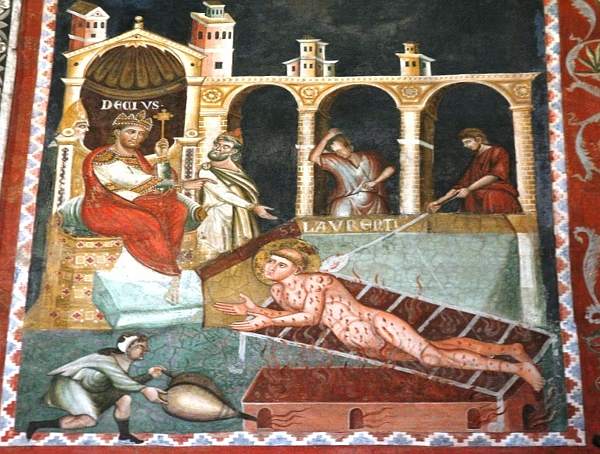
St. Laurentius kom fra Toledo i Spania og var erkediakon og skattmester hos pave Sixtus II i Roma da en forfølgelse brøt ut under keiser Valerian i år 258. Da pave Sixtus den 6. august ble ført av sted av soldatene, brøt Laurentius ut i gråt fordi han måtte leve og vennen fikk dra til paradis. Men paven beroliget ham og sa at han ville følge etter om tre dager, og befalte ham å utbetale Kirkens skatter til de fattige. Keiseren ville ha Kirkens skatt, men Laurentius ba om tre dager for å samle Kirkens skatter De brukte han til å dele ut Kirkens verdier til de fattige, samlet sammen tusener av spedalske, blinde og syke, fattige, enker og foreldreløse og gamle. Han sa til keiseren: «Se her er Kirkens skatt!» Da ble keiseren så rasende at han bestemte at denne frekke diakonen skulle lide en langsom og smertefull død. Han fikk Laurentius arrestert, lagt på en rist og langsomt stekt over svak varme. Leende sa han til keiseren: «Nå, din stakkar, er den ene siden stekt. Vend på steken!» Og glad for å ha blitt funnet verdig til den evige glede, takket han Gud, ba for Romas omvendelse og døde. Den helliges død styrket de kristne i troen.

Sitatet over er tatt fra katolsk.no. Jeg leste i dag også om hl. Laurentius på NML-bloggen.

Her ble 1 million mennesker drept

I går ettermiddag reiste vi nordøst for Amiens, til et av de viktigste områdene for Somme-offensiven i 1916 – men det var krigshandlinger her helt fram til høsten 1918. Vi stoppet i Albert (som hadde et stort, underjordisk museum) Ovillers (som hadde en stor krigskirkegård), Pozieres (flere krigskirkegårder), Thiepvald (stort minnesmerke over ca 700 000 døde) og Beaumont Hamel (rester etter skyttergraver og selve krigshandlingene i 1916).

Rett etter Pozieres stoppa vi også ved minnesmerket ved Moquet-gården, et lite høydedrag på knapt 400 m, der Australia mista nesten 7000 mann. Les mer om dette her.

Krigshandlingene under første verdenskrig virker ganske meningsløse, for å si det mildt – en fastlåst front der partene flytta seg bare noe få meter fram og tilbake over flere år. I dag skal vi vestover til strendene vest for Le Havre, der D-dagens landganger fant sted.

Kardinal anbefaler å motta kommunion knelende og på tungen

Interessant at katolsk.no skriver om hva kardinal Cañizares Llovera nylig sa om kommuionspraksisen i Den katolske Kirke i dag (som jeg allerde hadde lest på på andre nettsteder). De dekker hans uttalelser med forholdvis stor tilslutning:

Den spanske kardinal Antonio Cañizares Llovera, prefekt for Kongregasjonen for Gudstjenesten og Sakramentsordningen, anbefaler i et intervju med CNA at katolikker bør motta kommunion knelende og på tungen. «Det er rett og slett for å vite at vi står foran Gud selv, at Han kom til oss og at vi er uverdige,» sier kardinalen.

Llovera svarte på spørsmål om hvorvidt katolikker skal motta kommunion i hånden eller på tungen, og forklarte at munnkommunion «er et tegn på tilbedelse som trengs å gjenoppvekkes» i hele Kirken. «Faktisk så skal man bøye kne eller respektfullt bøye hodet dersom man mottar stående, men dette skjer ikke,» utdyper spanjolen. #Trivialiserer vi kommunionen, så trivialiserer vi alt, og vi kan ikke miste et så viktig øyeblikk som det å motta kommunion ved å erkjenne Kristi realpresens …»

Abdre nettsteder er ikke like positive, på Pray Tell var de første tre kommentarene (av i alt 111 så langt) som følger:

What planet are these folk from? – I had to read that like 5 times. I kept thinking he was saying we should receive communion as we sing a hymn in Spanish. – Perhaps it was clearer in the Spanish …

Pave Benedikt: «Forlat hatets vei!»

Fra katolsk.no:

Pave Benedikt XVI ba søndag for ofrene etter fredagens tragiske hendelser ved regjeringskvartalet og Utøya. Etter Angelusbønnen ved Castel Gandolfo kom Benedikt med følgende uttalelse: Påny blir vi dessverre møtt av nyheter om død og vold. Vi føler alle en dyp sorg over de store terrorangrepene som fant sted sist fredag i Norge. Vi ber for ofrene, de sårede og alle deres kjære. Til alle gjentar jeg min dyptfølte appell om å forlate for alltid hatets vei og flykte fra ondskapens logikk, sa pave Benedikt.

På Vatikanets nettsider kan vi lese mer om dette:

Pope Benedict XVI on Sunday prayed for the victim’s of Friday terrorist attack in Norway, which took nearly 100 lives. Speaking after his Angelus in Castel Gandolfo, the Holy Father said, “Unfortunately, yet again, comes news of death and violence,” and expressed his deep sorrow. He reiterated a “grief-stricken” appeal to all to forever abandon the way of hatred and to flee from the logic of evil.

Before reciting the Angelus, the Pope reflected on the importance of one’s conscience is doing good and avoiding evil. He was speaking about the first reading from Sunday’s Mass, which spoke of King Solomon, who had prayed to God to give him a meek heart, meaning a developed conscience to determine between good and evil.

The Pope said, “Solomon’s example applies to everyone…The moral conscience presupposes a capacity to listen to the voice of truth, and to be meek towards its indications.”

“In reality,” Pope Benedict XVI said, “the true quality of our own life and that of society depends on a person’s rightly formed conscience, and on everyone’s capacity to recognise good, separating it from evil, and to try and bring it about patiently to contribute to the cause of justice and peace.”

The Holy Father added, “People called to political office naturally have more responsibilities, and thus, as Solomon teaches, need God’s help even more.”

Erkebiskop Chaput uttaler seg om den tradisjonelle latinske messen

Erkebiskop Charles Chaput (uttales: shapju), i det intervjuet jeg nevnte i går, er en ganske frittalende mann, og uttalte seg der bl.a. om den tradisjonelle latinske messen, slik:

I’d like to take a rapid-fire tour of a few contentious issues. The idea is to get your basic position, without going into details. Let’s start with one you already raised: the Latin Mass.

The Latin Mass is deeply loved by some members of the church. The Holy Father, beginning with John Paul II and continued by Benedict XVI, has asked the bishops to be very sensitive to their needs. I was ordained in Rapid City in 1988, around the time that the Holy Father set up the Ecclesia Dei commission. As soon as I became aware of his desire, I welcomed the Priestly Fraternity of St. Peter to Rapid City to establish a community to meet the needs of those people. There were three or four St. Pius X [break-away] communities in the diocese, but by the time I left they had all disappeared because we met their needs. In Denver, we have a full parish served by the Fraternity of St. Peter, and we have two other places where the priest, at least on occasion if not weekly, celebrates the Tridentine form of the liturgy.

I’m very happy to follow the lead of the Holy Father on all of this, because he has insights that I don’t have. He also has an inspiration from the Holy Spirit which I don’t have.

Charles Chaput ny erkebiskop i Philadelphia

John Allen skriver at nåværende erkebiskop i Denver, Colorado, Charles Chaput, er utnevnt til den viktige posten som ny erkebiskop av Philadelphia:

Archbishop Charles Chaput of Denver, widely perceived both as a leader of the church’s conservative wing and a tough administrator with a strong work ethic, has been named by Pope Benedict XVI as the new archbishop of Philadelphia. …

John Allen offentliggjorde i dag også et ferskt intervju med erkebiskopen.

Tradisjonelle begravelsesritualer i Wien

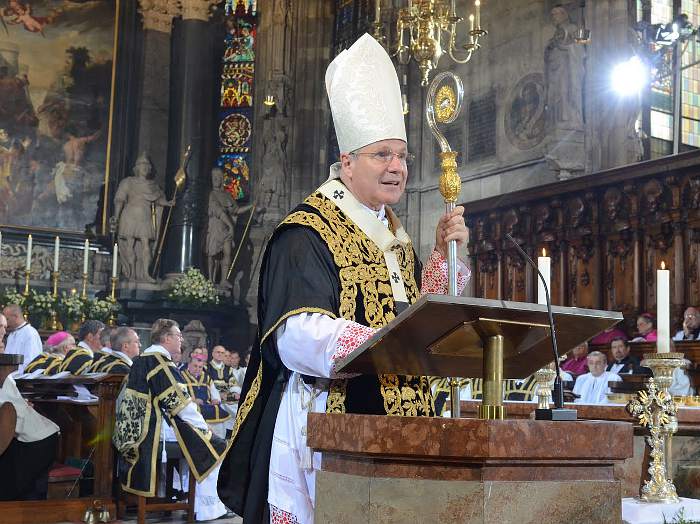
Da erkehertug Otto av Østerrike nylig ble gravlagt, fikk vi se at man fortsatt kan den tradisjonelle liturgien i Østerrike; flotte kirker, tradisjonelle og flotte seremonier – og faktisk så jeg absolutt ingen fiolette messeklær, bare svarte. Se bl.a. den romerske messehakelen (med dalmmatika under) kardinal Schönborn bærer over.

Les mer om dette og se mange flere bilder her.

Michael Haydens requiemmesse ble sunget – hør litt av den under.

Totalitære kirkekulturer vil kunne lede flere til Roma

Dr William Tighe avslutter sitt foredrag om Anglicanorum Cætibus (som jeg også nevnte her) med å refere til Skandinavia (Sverige mer enn Norge) for andre gang. Denne gangen dreier det seg om en totalitær kirkekultur som ikke ville tåle noen motstand mot de nye «dogmene» om kvinnelige prester og biskoper, og homoseksuelt samliv. I England er det ikke kommet så langt som i Sverige (og til og med USA ligger litt etter), men utviklinga i denne retning vil sannsynligvis fortsette, og da vil mange flere anglikanere (og lutheranere) kunne søke til Den katolske Kirke.

I England har man lenge vært ganske snille mot de konservative, fordi man i 1992 ikke ville fått gjennomført vedtaket om kvinnelige prester uten en slik generøsitet. Men nå, når man vil begynne med kvinnelige biskoper i England, er man langt mindre snille – og begynner langsomt å nærme seg det som lenge har vært tilfelle i Norge i flere år (jfr. Carissimi). Slik skriver Dr. Tinghe:

… Still, we have to recall what I wrote a the beginning of the last paragraph, “or at least not yet.” It seems pretty certain that woman bishops will come in the Church of England, even if they fail to achieve the requisite two-thirds majority in the final vote on the current legislation in July 2012, and that with minimal and inadequate guarantees to secure the position of opponents; and it seems clear as well that the present leadership of the Church of England lacks both the will and perhaps the desire to bar the way to the acceptance of the same sort of revisionism in sexual ethics and teaching that have prevailed in other provinces of the Anglican Communion. Those English churchmen who wish to make provision for the future while time remains to do so have but to look, not so much to the Episcopal Church here in the United States and other Anglican Communion provinces such as Canada and New Zealand, as to the Scandinavian Lutheran state churches, and especially the Church of Sweden, to see what the future may hold, a kind of liberal “pink” church totalitarianism pushed on from behind by bien-pensant elite public opinion, the media and the so-called “nanny state.” It does not seem certain at all, on the other hand, how the English Ordinariat and other ordinariats yet to be erected, will fare once the initial rocky hurdles, foreseen and unforeseen, have been overcome. In England, as I have already noted above, there has been talk, among Anglicans and former Anglicans alike, of a “second wave” of clergy and people coming into the Church through the Ordinariat, and perhaps there will be several such waves. That will remain our hope, but there are pressing demands and tasks enough to deal with for now.

Skroll til toppen